Anticimex 3D Sanidad Ambiental / Wisecon Estrategia de Consolidación: Explained
Imagine owning a restaurant in Madrid. Health inspectors come every few months. You worry about rats getting into the kitchen. You call a pest control company. They show up, check the traps, spray some stuff, and leave. You wait until next month’s visit and hope nothing bad happens in between.
That was pest control for most of the 20th century.
Now imagine something different. Sensors sit in your walls, your drains, your storage room. The moment a rodent touches anything, an alert fires instantly. A technician receives a message on their phone. They come only when needed. No unnecessary chemicals. No guessing.
That second world is exactly what Anticimex 3D Sanidad Ambiental and WiseCon built together. And the strategy behind it is worth understanding fully.
Quick Facts
| Detail | Information |
| Anticimex Founded | 1934, Stockholm, Sweden |
| Name Meaning | “Against bedbugs” (Latin) |
| Anticimex Global Presence | 22 countries, ~260 branches |
| Anticimex Employees Worldwide | ~12,000 |
| Customers Served Globally | ~3 million |
| Current Owner | EQT AB (private equity, acquired 2021) |
| Spain Entity Name | Anticimex 3D Sanidad Ambiental, S.A.U. |
| Spain Headquarters | Sant Cugat del Vallès, Barcelona |
| Former Name in Spain | ISS Higiene Ambiental 3D, S.A. |
| WiseCon Founded | 2008, Helsinge, Denmark |
| Anticimex Acquired 20% of WiseCon | January 2015 |
| Anticimex Acquired Remaining 80% | April 2017 |
| WiseCon Role Today | Global Innovation Center for Digital Pest Control |
| Core Digital System | Anticimex SMART |
| Public Contracts Won in Spain | 1,260+ adjudications worth €12.72M+ |
What Is Anticimex 3D Sanidad Ambiental?
Most people outside Spain haven’t heard of it. But inside the country, it’s a major name in environmental hygiene.
Anticimex 3D Sanidad Ambiental is the Spanish arm of the worldwide Anticimex group. Its headquarters sit in Sant Cugat del Vallès, near Barcelona. Before it carried the Anticimex brand, the company operated under the name ISS Higiene Ambiental 3D.
The services it provides go far beyond killing bugs. Think about everything that touches public health — disinfection of spaces, rodent control, bird management on buildings, fumigation, wood treatment against termites, water system hygiene, indoor air quality monitoring, and phytosanitary treatments for plants.
The clients it serves are serious about compliance. Food factories. Hospitals. Hotels. Ports. City councils. These aren’t places where a missed rat inspection is just inconvenient — it can shut an operation down or put people at risk.
That’s why this company exists. And it’s why what happened next — the connection with WiseCon — mattered so much.
How Did Anticimex Get to Spain in the First Place?
This part of the story starts far from Spain. It starts in Sweden, in 1934.
A small family company launched in Stockholm with one goal: fix the bedbug crisis. At that time, nearly half of all Swedish homes had bedbugs. It was a genuine public health problem. This company offered customers something revolutionary — a “no bedbugs” guarantee, at a fixed annual price.
That was unheard of. People paid. It worked. The company grew.
The name of that company was Anticimex. The word literally means “against bedbugs” in Latin. And that early promise — pay once, stay protected — became the philosophy that still drives the business nearly a century later.
Through the 1940s and 50s, Anticimex expanded to handle rodents and insects too. In the 1960s, they did something truly unusual — they partnered with a Swedish insurance company to bundle pest protection into insurance packages. Prevention, not reaction. That idea was ahead of its time by decades.
International expansion followed. Norway came first in 1973. Then other Nordic countries. Then Germany, the Netherlands, and eventually much of Europe.
In 2012, private equity firm EQT acquired Anticimex and the real acceleration began. Acquisitions came fast — roughly 40 to 50 deals per year at peak. In 2013, Anticimex bought the local pest control divisions of ISS across twelve European countries at once, including Spain. That’s how 3D Sanidad Ambiental entered the Anticimex family.
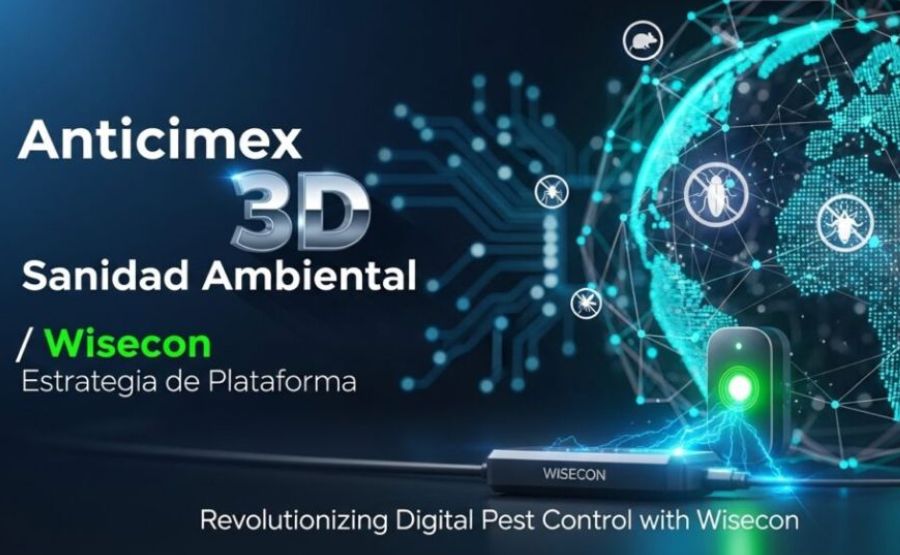
What Is WiseCon — And Why Did It Change Everything?
Before WiseCon became part of Anticimex, it was a small Danish company doing something no one else in pest control was doing seriously.
WiseCon started in 2008 in Helsinge, a quiet town in Denmark. The founders had one obsession: replace passive, toxic rat traps with something smarter. Something electronic. Something that would tell you the moment it caught something, without a human having to physically check it.
They built traps with sensors inside. Motion detection. Heat sensors. Wireless communication chips. The moment a rodent triggered the device, a signal went out. Instantly. No waiting. No weekly inspection rounds.
Think about what that means for a food factory. A rodent enters on a Tuesday evening at 10 pm. The old system? Nobody finds out until the Thursday inspection visit. Two full days of potential contamination risk. With WiseCon’s system? An alert fires at 10:01 pm. A technician is notified. The problem is contained before morning.
By 2015, WiseCon had 56 employees and was recognized as a world leader in electronic pest monitoring technology. Anticimex had been watching closely. In January 2015, they bought a 20% stake.
That first investment wasn’t random. Anticimex used the minority position carefully. They tested WiseCon technology in real facilities across their existing markets. They watched it perform. They measured customer reactions. They learned how to roll it out at scale.
It was a controlled experiment. And it worked.
By early 2017, Anticimex had installed over 20,000 SMART rodent devices across the world. More than 20% of all new Anticimex sales that year involved digital SMART traps. The data was undeniable.
In April 2017, Anticimex bought the remaining 80% of WiseCon. The deal amount was never publicly disclosed — described only as a “three-digit million figure” in Danish kroner. WiseCon stopped being a separate company. It became the Anticimex Innovation Center, the global R&D headquarters for every digital pest control tool the group would ever build.
Knowing “Estrategia de Consolidación”: What Does It Mean in Practice?
The phrase estrategia de consolidación is Spanish for “consolidation strategy.” But what does that mean in practice?
Here’s the honest answer. This isn’t a single product name. It isn’t one official project with a formal title. It’s a description of how Anticimex has been building its business — combining local expertise with global technology and rolling everything into one unified system.
Think of it like this. Anticimex finds a strong local pest control company somewhere in Europe. Maybe a family business that’s been operating in a city for thirty years. Great reputation. Strong client relationships. Local knowledge you can’t buy.
Anticimex acquires it. The local company keeps its people. Clients still see familiar faces. But behind the scenes, everything connects to the same digital infrastructure — the SMART monitoring platform, the data dashboards, the compliance reporting systems. Local service, global technology.
In Spain specifically, that’s what happened. 3D Sanidad Ambiental had the relationships, the certifications, the government contracts. WiseCon provided the technology backbone. Anticimex provided the global brand and the capital to grow.
Three pieces. One system. That’s the consolidation strategy.
The Anticimex SMART System: How the Technology Actually Works
Let’s get concrete. What does the SMART system actually look like in a building?
Step 1: Assessment. A trained technician visits the site first. They walk every floor, every storage room, every drain access point. They map risk zones — where pipes run, where food is stored, where gaps in walls or floors exist. They build a threat profile for that specific building.
Step 2: Device installation. Non-toxic sensor traps go in at every identified risk point. These devices use pressure plates, heat sensors, and motion detection to know when a rodent is present. Wall-mounted sensors monitor air quality and environmental conditions in sensitive zones.
Step 3: Connection. Every device connects wirelessly to a central platform. Data flows continuously. Not once a week. Not during business hours. Continuously, 24 hours a day.
Step 4: Real-time alerts. When a device triggers, an alert goes immediately to the assigned technician. The alert includes the exact location, the time, and the device ID. No guesswork.
Step 5: Response. A technician goes to that specific point only. Not a full inspection tour. Not a blanket spray treatment. Targeted, precise, necessary.
Step 6: Reporting. Every single event gets logged automatically. Clients get access to dashboards showing pest activity maps, trend data over time, and compliance documentation ready for audits. In industries like food production where regulatory inspections are serious, this data trail is worth its weight in gold.
Why This Matters for Public Sector Clients in Spain
Anticimex 3D Sanidad Ambiental has won over 1,260 public contracts in Spain, totalling more than €12.72 million in adjudications. That’s not small. That’s a significant piece of Spain’s public environmental hygiene infrastructure.
Public contracts come with strict requirements. Regulators want documentation. They want to see intervention records. They want evidence that services were actually performed, not just claimed. The SMART digital platform provides exactly that — automatic, tamper-proof records of every device activation, every technician visit, every service action.
One notable example: the company secured a contract worth approximately €25.8 million from the Consell Insular de Menorca for extermination and disinfection services across the island. Contracts of that scale are only possible when a company can demonstrate compliance capability and data transparency at scale.
In cities like Jerez de la Frontera, SMART devices connected with municipal systems gave local authorities detailed maps of underground rodent activity. The results let the city target interventions precisely, reducing pesticide use while improving coverage.
The Acquisitions Keep Coming: Spain’s Consolidation in Action
The consolidation strategy isn’t a plan that got written and filed away. It’s actively happening right now.
Look at the Spanish Register of Companies (Boletín Oficial del Registro Mercantil) and you’ll find a long trail of recent absorptions into Anticimex 3D:
- GABINETE TÉCNICO DE SANIDAD AMBIENTAL S.L. — absorbed September 2025
- GTSA PEST CONTROL S.L. — absorbed September 2025
- PLASERMAN SALUD PÚBLICA S.L. — absorbed September 2025
- PEST SYSTEM INTERNATIONAL S.A. — acquired August 2025
- AQUASAFE ANALYTICS S.L. — acquired May 2025
- BIOTECNOS INSECT-O CONTROL S.L. — previously absorbed
- OIARSO CONTROL DE PLAGAS S.L. — previously absorbed
- ANEMA PLAGAS S.L. — previously absorbed
Each of these was a local or regional pest control operator in Spain. Each had its own client base, its own technicians, its own local reputation. Each now operates under the Anticimex 3D umbrella, connected to the same technology platform.
This is what consolidation looks like when it’s actually working. Not a single dramatic merger, but a steady, disciplined collection of local players into one coordinated network.
What Industries Benefit Most?
The SMART system and the services of Anticimex 3D Sanidad Ambiental aren’t for everyone equally. Compared to other industries, some receive far more.
Food production and processing: This is the clearest case. Rodents in a food plant aren’t just a hygiene problem — they trigger regulatory shutdowns, product recalls, and reputational disasters. Continuous monitoring with automatic documentation gives food producers audit readiness at all times.
Healthcare: Hospitals need verifiably sterile environments. One rodent sighting near a patient ward is a serious event. Continuous monitoring with real-time alerts means problems get caught in minutes, not days.
Hospitality: Hotels live and die on reviews. A guest who spots a cockroach posts it instantly. Preventive systems catch problems before they reach guests.
Logistics and warehousing: Large warehouses are notoriously difficult to inspect thoroughly. Sensor networks cover corners that no inspector ever reaches during a weekly round.
Public infrastructure: Sewers, metro systems, parks. These are exactly the environments where WiseCon originally developed its sewer trap technology — designed to catch and reset automatically inside drainage pipes, without requiring technician entry into confined underground spaces.
The Environmental Argument: Less Poison, More Data
One thing that often gets overlooked in the business discussion is the environmental side. This strategy is genuinely greener than traditional pest control.
Standard rodent control relies heavily on rodenticide — rat poison placed in bait stations. The problem is that poison doesn’t stay in the bait station. It gets eaten by a rat. That rat wanders. It dies somewhere unexpected. Another animal eats it. The toxin climbs the food chain.Owls, foxes, cats — all vulnerable to secondary poisoning from rodenticide.
European regulations have been tightening on rodenticide use for years. Several active ingredients previously common in baits have been restricted or banned. The direction of travel is clear.
The SMART system’s traps work mechanically. A pressure plate triggers a killing mechanism. No poison. No secondary risk. The device resets automatically. Just data — a timestamp and a location.
For companies that need to demonstrate sustainability to clients, regulators, or investors, this matters enormously. Anticimex has leaned into this story hard, and the technology genuinely supports it.
The Bigger Picture: Why Pest Control Is a Booming Industry
Something that surprises many people: pest control is growing faster than the global economy, consistently, year after year.
The reason is a combination of factors all pushing in the same direction at once. Climate change is expanding the range of many pest species — insects and rodents that previously couldn’t survive northern winters are now thriving year-round in countries where they were rare. Urban density concentrates food waste and creates perfect shelter for pests. Rising middle classes globally demand higher hygiene standards. Stricter regulations mean businesses that once ignored pest control now face legal obligations to address it.
Anticimex’s CEO at the time of the WiseCon acquisition described digital pest control as “one of the most significant changes in the industry since the introduction of traditional rat poisons.” Looking at the trajectory of the company and the industry since 2015, that assessment looks accurate.
Under EQT’s ownership, Anticimex reached a valuation of approximately SEK 60 billion (around €5 billion) in 2021. The US alone accounts for roughly 40% of revenues. The company runs around 260 branches in 22 countries. That is not the profile of a niche player.
What the Consolidation Strategy Looks Like From the Outside
If you’re a competitor, a client, or an investor watching this strategy unfold, here’s what you see.
A company that enters a market not by building from scratch but by buying what already works. Then it plugs those local companies into a global technology platform that makes them collectively more capable than they were individually. Then it keeps buying more.
The local brand often stays for a while during the transition. Clients still work with the same technicians. The relationship continuity matters. But behind the scenes, the data flows, the reporting tools, and the compliance systems are unified.
This is the playbook EQT and Anticimex have executed roughly 400 times in total across all markets. In Spain specifically, the pace of recent absorptions in 2024 and 2025 suggests the local consolidation is accelerating.
Final Words
Here’s what this story really is.
It’s a 90-year-old Swedish company that started by fighting bedbugs and never stopped solving the same core problem — how do you keep people safe from pests in a way that’s reliable, documentable, and as clean as possible?
WiseCon gave that mission a new tool. Digital traps, real-time data, remote monitoring. A way to protect food factories and hospitals and city sewers with something more like a nervous system than a schedule.
Anticimex 3D Sanidad Ambiental is where that tool meets the ground in Spain. Thousands of public contracts. Decades of local expertise. Technicians who know their territories. All of it now connected to a Danish innovation center that keeps building better devices year after year.
The estrategia de consolidación isn’t complicated. Buy the best local companies. Connect them to the best technology. Keep improving both. Repeat.
It’s actually very simple. It’s just very hard to execute well. And from the evidence so far — the contracts, the acquisitions, the growth — they’re executing it very well indeed.
FAQs
1. What does Anticimex 3D Sanidad Ambiental actually do?
It provides environmental hygiene and pest control services across Spain. Services include rodent control, disinfection, bird management, fumigation, water system hygiene, indoor air quality monitoring, and phytosanitary treatments for plants. It works mainly with public institutions, food companies, hospitals, hotels, and large logistics facilities.
2. What does “sanidad ambiental” mean in English?
It translates directly as “environmental health” or “environmental hygiene.” It refers to the science and practice of keeping spaces — buildings, drains, public areas — clean and safe from biological threats like pests, bacteria, and contaminated water.
3. Who owns Anticimex 3D Sanidad Ambiental?
It is the Spanish subsidiary of the Anticimex Group, which is majority-owned by EQT AB, a Swedish private equity firm. EQT first invested in Anticimex in 2012 and transferred ownership to its EQT Future fund in 2021.
4. What was the company called before Anticimex bought it?
Its earlier registered name was ISS Higiene Ambiental 3D, S.A. It was part of the ISS facility services group before being acquired by Anticimex in 2013, along with ISS pest control operations in eleven other European countries.
5. What is WiseCon and where is it based?
WiseCon is a Danish technology company founded in 2008 in Helsinge, Denmark. It specializes in electronic rodent traps and digital monitoring systems. Since Anticimex completed its full acquisition in 2017, WiseCon has operated as the Anticimex Innovation Center — the global research and development hub for all digital pest control technology across the group.
6. When exactly did Anticimex acquire WiseCon?
The acquisition happened in two stages. Anticimex bought a 20% stake in January 2015. Two years later, in April 2017, it acquired the remaining 80% and formally converted WiseCon into the Anticimex Innovation Center.
7. What is the Anticimex SMART system?
SMART is Anticimex’s digital pest control platform. It combines connected, non-toxic traps and sensors with a central monitoring dashboard. When a device detects pest activity, it sends an instant alert to a technician. The system logs every event automatically, giving clients a complete record for compliance and audit purposes.
8. Do the SMART traps use poison?
No. The core SMART system uses mechanical traps — physical pressure mechanisms — rather than chemical rodenticides. This reduces the risk of secondary poisoning in wildlife and addresses the increasingly strict European regulations on rodenticide use.
9. What is the “estrategia de consolidación” (consolidation strategy)?
It’s the business model Anticimex uses to grow: acquire strong local pest control companies in a market, keep their people and client relationships intact, and connect them to the global SMART technology platform. It standardizes data, reporting, and service quality across many locations while preserving local expertise. In Spain, the most recent wave of acquisitions shows this strategy still actively unfolding.
10. Which sectors benefit most from the Anticimex / WiseCon approach?
Food production facilities, hospitals, hotel chains, logistics warehouses, and public infrastructure like sewers and municipal parks. These are environments where continuous monitoring and automatic documentation are essential — not just convenient.
11. How many public contracts has Anticimex 3D Sanidad Ambiental won in Spain?
According to public procurement records, the company has won over 1,260 contract adjudications in Spain, totalling more than €12.72 million. Its clients include city councils, research parks, healthcare providers, and other public institutions.
12. How does this strategy affect smaller local pest control companies in Spain?
Many of them get acquired. The recent BORME (Boletín Oficial del Registro Mercantil) records show a series of absorptions in 2024 and 2025 — companies like GTSA Pest Control, Gabinete Técnico de Sanidad Ambiental, Plaserman Salud Pública, Pest System International, and Aquasafe Analytics all became part of Anticimex 3D. For the acquired companies, it means access to better technology and a larger client base. For the market overall, it means continued consolidation toward fewer, larger players.
13. Is Anticimex planning to list on a stock exchange?
The company came close to an IPO in spring 2021 but it didn’t proceed as a full public listing. Instead, the EQT Future fund took ownership in a deal that valued the business at approximately SEK 60 billion (around €5 billion). A future IPO remains a possibility, but no confirmed timeline has been announced.
14. How does the SMART system help with regulatory compliance?
Every trap activation, every technician visit, and every service action gets logged automatically with a timestamp and location. Clients can access this data through a dashboard and export it as documentation for health inspections, food safety audits, or public procurement requirements. This is particularly valuable for food producers and healthcare facilities where proof of pest management is a legal requirement.
15. Is this approach available to small businesses or only large ones?
Anticimex has historically focused on medium to large clients — food companies, institutions, public bodies — due to the infrastructure investment required for SMART systems. However, as the technology matures and hardware costs decrease, smaller commercial clients are increasingly being served. The residential market also exists through some partner programs, though it remains a smaller part of the business relative to commercial and public sector contracts.
Explore more, learn more, and think deeper with Theory Magazine.