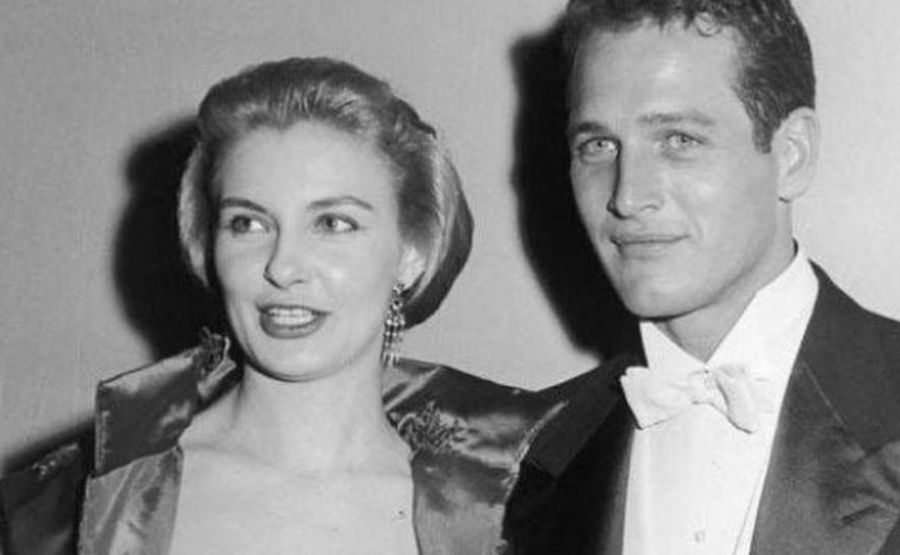

Quick Bio
| Detail | Information |
| Full Name | Caroline “Kim” Smedvig Taylor |
| Born | May 31, 1953, Albany, New York, USA |
| Age (2026) | 72 |
| Current Residence | Lenox (Western Massachusetts) |
| Nationality | American |
| Education | Albany Academy for Girls; BA, Smith College (class of 1975) |
| Early Career | Reporter, Knickerbocker News (Albany); Reporter, Springfield Daily News |
| Major Career Role | The Boston Symphony Orchestra’s director of marketing and public relations from 1980 until 2004 |
| Post-BSO Role | BSO Trustee (Board of Overseers 2007; Trustee from September 2008) |
| Published Work | Seiji: An Intimate Portrait of Seiji Ozawa (1998, with photographer Lincoln Russell) |
| Performing | Member, Tanglewood Festival Chorus; backup vocalist for James Taylor |
| First Husband | Rolf Thorstein Smedvig (married December 1980; divorced) |
| Current Husband | James Taylor (married February 18, 2001, Lindsey Chapel, Emmanuel Episcopal Church, Boston) |
| Children | Twin sons: Henry Taylor and Rufus Taylor (born April 2001, via surrogacy and IVF) |
| Estimated Net Worth | $500,000–$2 million (individual; James Taylor’s net worth estimated at $80 million) |
Why Caroline Smedvig’s Story Is Worth Telling on Its Own Terms
The entertainment press calls her James Taylor‘s wife. The Boston classical music world calls her the person who spent twenty-four years building the public identity of the BSO. Those two descriptions belong to the same woman, and they are both accurate. But only one of them is chronologically first.
Caroline Smedvig joined the Boston Symphony Orchestra in 1980, the year Ronald Reagan won the presidency. She left in 2004. In those twenty-four years, she shaped how one of the world’s most storied orchestras communicated with the public, cultivated donors, and preserved its place in American cultural life during a period of significant change for classical music institutions.
She will be 72 years old in 2026. She is still a BSO trustee. She has been married to James Taylor for twenty-five years. And the most underreported fact about her life is that she built her professional reputation before any of that celebrity adjacency existed.
See also “Jacelyn Reeves: The Woman Who Refused the Spotlight She Never Asked For“
Albany Beginnings: A Lawyer’s Daughter With a Bent Toward Language
Caroline Smedvig was born on May 31, 1953, in Albany, New York — the state capital, a mid-sized city shaped by government, law, and institutions.
Her father, Albert Smedvig, worked as a lawyer. The household valued education and professional competence. Those values directed her early — she attended the Albany Academy for Girls, a rigorous private school that has been educating young women since 1814. The combination of a lawyer father and an academically demanding secondary school produced someone who understood that precision in communication is not optional; it is the whole job.
From Albany she went to Smith College in Northampton, Massachusetts, graduating in 1975. Smith is one of the original Seven Sisters women’s colleges — selective, intellectually serious, and consistently oriented toward producing graduates who occupy leadership roles. Caroline’s path from Smith into journalism, and then into arts administration at a major orchestra, follows the line of the education she received there.
She emerged from Smith with skills she immediately put to use.

The Journalism Years: Reporting Before the Orchestra
Before the Boston Symphony Orchestra, before the marketing campaigns and press strategies, Caroline Smedvig was a newspaper reporter.
She worked at the Knickerbocker News in Albany — a daily paper that had been publishing since 1843 and served the Capital Region with straightforward local coverage. During her college years, she contributed to that paper, learning the mechanics of journalism: how to ask the right question, how to compress information, how to tell a story with clarity and economy.
After graduation she moved to the Springfield Daily News — an afternoon newspaper in Springfield, Massachusetts that gave her experience in a slightly larger market. These weren’t prestigious assignments. They were the foundation-level positions where reporters learn that accuracy matters more than flair, and that the audience never owes you their attention.
That instinct for clear, audience-centered communication would define everything she did when she crossed from journalism into arts management. The transition was not a departure from her training. It was the same discipline applied in a different setting.
Joining the BSO: A Career That Spanned a Quarter-Century
In 1980, Caroline Smedvig joined the Boston Symphony Orchestra as a public relations professional. She was twenty-six or twenty-seven years old.
One of the top musical organizations in the US was the BSO she entered.Founded in 1881, it had been shaped for decades by the musical direction of Seiji Ozawa, who took the podium in 1973 and would remain there until 2002. The orchestra performed at Symphony Hall in Boston — a National Historic Landmark and one of the acoustically finest concert halls anywhere in the world — and at Tanglewood, its summer home in the Berkshires.
Caroline worked her way into the role of Director of Public Relations and Marketing. In that capacity, she was responsible for a set of functions that sound straightforward on paper but require considerable sophistication in practice: crafting the language that draws audiences toward concerts, managing the institution’s public image across media, handling the press apparatus for major events and artist announcements, and maintaining the delicate relationship between artistic ambition and audience accessibility.
Classical music institutions in the 1980s and 1990s faced genuine pressure. Television, cable, and eventually the internet were reshaping how Americans consumed culture. Ticket sales required active stewardship. The BSO under her care developed a public identity that remained prestigious without becoming remote — a balance many comparable institutions struggled to maintain.
She stayed for twenty-four years.
That duration is its own statement. People do not spend nearly a quarter-century in a demanding professional role at a major institution without leaving a mark on it. Her colleagues at the time are reported to have regarded her as professional, knowledgeable, and deeply committed to the institution’s mission.
The Book: An Intimate Portrait of Seiji Ozawa
In 1998 — six years before she retired from the BSO — Caroline Smedvig co-authored a book that stands as the most direct evidence of her intellectual engagement with the institution she served.
Seiji: An Intimate Portrait of Seiji Ozawa was published with photographs by Lincoln Russell. The book documented the conductor who had led the Boston Symphony Orchestra for twenty-five years and was, by 1998, one of the most recognizable figures in classical music globally.
Writing an intimate portrait of a living cultural institution’s sitting music director, while simultaneously serving as that institution’s Director of Public Relations, required considerable care. It also required genuine access, deep familiarity with the subject and the organization, and the kind of institutional trust that only comes from sustained professional credibility.
The book is not sensationalist. It is not a tell-all. It is a careful, respectful portrait of a complex man and musician — consistent with the values Caroline had brought to every public-facing role she had held.
That she was able to produce the work while active in her role at the BSO speaks to how thoroughly she had embedded herself in the organization’s intellectual and artistic life. She was not simply managing its press releases. She understood it from the inside.

Life Inside the BSO: The Chorus, the Music, the Culture
Caroline Smedvig’s relationship with the BSO was not limited to the administrative side of the building.
She sang as a member of the Tanglewood Festival Chorus — the all-volunteer chorus that performs year-round with both the Boston Symphony and Boston Pops, at Symphony Hall and at Tanglewood. The TFC is not a hobbyist ensemble. It has recorded with conductors including Seiji Ozawa, Leonard Bernstein, Bernard Haitink, James Levine, and John Williams. It has toured internationally. Participation requires musicianship, commitment, and a genuine love of the repertoire.
For Caroline, singing in the TFC while simultaneously directing the orchestra’s public relations meant inhabiting the institution from two entirely different angles at once. She understood what audiences experienced because she was, in some sense, an audience — and a performer — as well as its publicist.
This dual engagement is not something most arts administrators achieve. It made her perspective on the BSO’s public communication more grounded than it might otherwise have been.
The First Marriage: Rolf Thorstein Smedvig
The surname she carried for most of her professional life belonged to her first husband.
Rolf Thorstein Smedvig was born on September 23, 1952, in Seattle, Washington, to parents who were both professional musicians — his father a Norwegian-born composer and music teacher, his mother an Icelandic-born violinist in the Seattle Symphony. Music was the environment he was raised inside.
He was extraordinary. At thirteen, he became principal trumpet of the Seattle Youth Symphony. In 1971, at Tanglewood, Leonard Bernstein personally selected him as trumpet soloist for the world premiere of Mass, composed to inaugurate the Kennedy Center for the Performing Arts in Washington. In 1973, at age nineteen, he joined the Boston Symphony as its youngest musician. By 1979, Seiji Ozawa had appointed him principal trumpet — the most prestigious brass position in the orchestra.
He was also a co-founder of the Empire Brass Quintet, one of the most celebrated chamber ensembles in American classical music history. His recordings for Telarc were praised for a sound his colleagues described as almost impossibly beautiful. Ronald Feldman, music director of the Berkshire Symphony, called him one of the most lyrical musicians he had ever heard on a brass instrument.
Caroline married Rolf in December 1980 — the same year she joined the BSO. The marriage placed her at the intersection of two worlds that were already her professional home: arts administration and the lives of the musicians she worked to promote.
Their marriage ended in divorce. The exact timing is a subject of some inconsistency across sources — some cite a separation in the early 1980s, others suggest it lasted longer. What is documented is that Rolf eventually remarried a woman named Kelly, a musician and art teacher, and had four children with her: twins Soren and Soffia, and daughters Annika and Aurora. He died on April 27, 2015, of a heart attack at his home in West Stockbridge, Massachusetts. He was sixty-two years old.
Caroline kept the surname Smedvig throughout her career and in her private life. It was the name under which she built everything professionally.
Meeting James Taylor: A 1993 Concert and a Two-Year Wait
The meeting between Caroline Smedvig and James Taylor has been described publicly by Taylor himself with characteristic candor.
In 1993, Taylor performed at Symphony Hall with the Boston Pops, conducted by John Williams. Caroline was present in her professional capacity — the Director of Public Relations and Marketing did not sit out Boston Pops concerts. Taylor saw her. He has said publicly: “I remember her from that time, and it was a couple of years later that I was free to see anyone.”
That qualifier — “free to see anyone” — points to a constraint that had nothing to do with Caroline. Taylor’s second marriage, to actress Kathryn Walker, was still in its final stages. He was not available. The connection registered, and then went dormant.
By 1995, Taylor was free. Their relationship began that year. They dated for approximately six years before marrying — a timeline that reflects both the complexity of their respective circumstances and, one might reasonably infer, an unhurried confidence in what they were building.
James Taylor arrived at this relationship with a biography that is well-documented and carries significant weight. His first marriage, to singer Carly Simon in November 1972, produced two children — Ben and Sally Taylor — and ended in divorce in 1983 after years of well-publicized personal turbulence, including his struggles with heroin addiction. His second marriage to Kathryn Walker lasted from 1985 to 1996. He was, by any honest accounting, not a simple figure to build a life with.
Caroline was forty-seven when they married. He was fifty-three. The decision to marry at those ages, after those histories, suggests something more deliberate than romance in the conventional sense.
The Wedding and the Twins: February and April 2001
On February 18, 2001, Caroline Smedvig and James Taylor married at Lindsey Chapel, a smaller sanctuary within Boston’s Emmanuel Episcopal Church. Approximately fifty family members and close friends attended. The ceremony was intimate — not a celebrity spectacle, but a genuine private commitment witnessed by people who knew them.
The timing of what followed was remarkable. In April 2001, just weeks after the wedding, Caroline and James welcomed twin sons: Henry Taylor and Rufus Taylor.
The twins had been conceived through in vitro fertilization and carried by a surrogate — a family friend of Taylor’s, according to reporting by the Boston Herald at the time. The surrogate underwent IVF in 2000, and news of the pregnancy had become public only about a month before the boys arrived. Caroline was forty-seven when they were born.
The decision to pursue surrogacy reflects both the realities of having children at that stage of life and the couple’s determination to build a family on their own terms. The pregnancy, the wedding, and the first months of parenthood all overlapped in a single compressed period of profound personal change.
Henry and Rufus have grown up in the musical world their parents inhabit. Henry in particular has joined his father on stage as a backup vocalist at certain performances — an inheritance that carries its own weight when your father has sold over 100 million records.
After the BSO: Trustee, Author, Supporter
Caroline retired from her staff role at the Boston Symphony Orchestra in 2004, after twenty-four years on the payroll. The departure did not end her relationship with the institution.
In 2007, she was appointed to the BSO’s Board of Overseers. In September 2008, she transitioned from overseeing board members to full trustee — a formal governance role that places her among those responsible for the organization’s strategic direction and financial health.
Publicly, her post-2004 life has been less visible than her BSO years, which is consistent with how she has always conducted herself. She has accompanied James Taylor on significant public occasions, appearing at events including the USC Shoah Foundation’s Ambassadors for Humanity Gala, among others.
She has been called “Kim Taylor” by some sources — a nickname rather than a legal name change — which points to the informal way the Taylor world absorbed her identity into its orbit. Whether she embraces or simply tolerates that framing is not something she has stated publicly. Her professional record carries the name Caroline Smedvig, and that is the name attached to her work.
The Complexity Behind the Quiet Life
Caroline Smedvig does not project complexity. She projects composure. Those are different things.
Her first marriage was to a genuinely exceptional musician who later died young. Her twenty-four-year career unfolded inside an institution whose internal dynamics — the personalities of major conductors, the pressures of public fundraising, the politics of arts boards — are not simple. She published a book about the most powerful figure in that institution while still employed there. She married a man with two previous marriages and a biography saturated with documented pain. She built a family through surrogacy at forty-seven.
None of these things are the biography of someone living a quiet, uncomplicated life. They are the biography of someone who has consistently chosen substance over visibility, and who has managed the complexity of her circumstances with sufficient steadiness that the complexity itself becomes invisible.
That steadiness is its own achievement. It deserves to be named.
Where She Stands in 2026
Caroline Smedvig is seventy-two years old, a BSO trustee, and a resident of Lenox, Massachusetts — a small town in the Berkshires that happens to sit within a few miles of Tanglewood, the summer home of the orchestra she served for so long.
The proximity is not accidental. The Berkshires have been her professional and personal home for decades, through multiple lives. James Taylor’s career continues; she remains present in it without being subsumed by it.
Her sons Henry and Rufus are now twenty-five years old. The arc of their lives as adults is not publicly documented in any detail, which suggests she has maintained the same protective privacy around them that she maintained around herself.
She worked in one of America’s most demanding cultural institutions for twenty-four years. She left it with her reputation intact, her relationships within it strong enough to earn trusteeship, and her book on the shelf as evidence of what she understood about the people and place she had served.
That is a substantial professional legacy, entirely separate from the person she married.
Final Words
There is a version of Caroline Smedvig’s story that begins in February 2001 and centers entirely on her marriage to a famous man. That version exists because it is easier to write and easier to search. It is also incomplete to the point of distortion.
The fuller story begins in Albany in 1953, runs through a rigorous women’s college in 1975, moves through newspaper newsrooms in upstate New York, and arrives at Symphony Hall in 1980 — where a young public relations professional spent twenty-four years helping one of America’s great orchestras tell its story to the world.
She was a journalist before she was an arts administrator. She was a publicist before she was an author. She was married to a trumpet prodigy before she met a rock icon. She was a mother at forty-seven through a medical path that required courage and determination.
James Taylor wrote a song about her. That is nice. The career she built before he wrote it is the more durable document.
FAQs
1. Who is Caroline Smedvig?
She is an American journalist, arts administrator, author, and singer. She served as Director of Public Relations and Marketing at the Boston Symphony Orchestra from 1980 to 2004. She is married to singer-songwriter James Taylor and has served as a BSO trustee since 2008.
2. Caroline Smedvig was born where and when?
She was born on May 31, 1953, in Albany, New York. She turns 73 in 2026.
3. Where did Caroline Smedvig go to school?
She attended the Albany Academy for Girls for secondary education. She earned her bachelor’s degree from Smith College in Massachusetts, graduating in 1975.
4. What did Caroline Smedvig do before the BSO?
She worked as a newspaper reporter — first at the Knickerbocker News in Albany during her college years, and then at the Springfield Daily News in Massachusetts. Journalism was her first professional career.
5. What was her role at the Boston Symphony Orchestra?
She served as Director of Public Relations and Marketing for twenty-four years, from 1980 to 2004. In that role she managed concert promotion, press relations, and the orchestra’s public communications. She has served as a BSO trustee since September 2008, having joined the Board of Overseers in 2007.
6. Who was Caroline Smedvig’s first husband?
Rolf Thorstein Smedvig, an American classical trumpeter born on September 23, 1952, in Seattle. He was the BSO’s principal trumpet, a protégé of Seiji Ozawa, and a co-founder of the Empire Brass Quintet. He and Caroline married in December 1980 and later divorced. Rolf died of a heart attack on April 27, 2015, at his home in West Stockbridge, Massachusetts. He was sixty-two years old.
7. How did Caroline Smedvig meet James Taylor?
They first encountered each other in 1993 at Symphony Hall during a Boston Pops concert conducted by John Williams, where Taylor was performing. It wasn’t until 1995, after Taylor’s second marriage to Kathryn Walker ended, that they started dating. At that time, Taylor said he was “free to see anyone.”
8. When did Caroline Smedvig marry James Taylor?
On February 18, 2001, in Lindsey Chapel — a smaller chapel within Boston’s Emmanuel Episcopal Church. Approximately fifty family members and close friends attended.
9. Did Caroline Smedvig and James Taylor have children?
Yes. Twin sons Henry Taylor and Rufus Taylor were born in April 2001, weeks after the wedding. They were conceived through in vitro fertilization and carried by a surrogate, a family friend of Taylor’s, according to the Boston Herald. Caroline was forty-seven years old when they were born.
10. What book did Caroline Smedvig write?
She co-authored Seiji: An Intimate Portrait of Seiji Ozawa, published in 1998. The book documented the long-serving BSO music director Seiji Ozawa, with photographs by Lincoln Russell. She wrote it while still serving as the BSO’s Director of Public Relations.
11. Did Caroline Smedvig perform musically?
Yes. She was a member of the Tanglewood Festival Chorus — the all-volunteer chorus that performs year-round with the Boston Symphony and Boston Pops. She has also appeared as a backup vocalist for James Taylor at selected performances.
12. Why is she sometimes called “Kim Taylor”?
“Kim” appears to be a nickname used within the Taylor family circle rather than a formal name change. Some sources reference her as “Caroline Kim Smedvig” or “Kim Taylor.” Her professional and legal identity throughout her career has been Caroline Smedvig.
13. What is Caroline Smedvig’s net worth?
Estimates across sources range from $500,000 to $2 million, based on her journalism and arts administration career. These figures are unverified by any authoritative source. James Taylor’s net worth is widely estimated at approximately $80 million. The figures for Caroline represent her individual professional earnings rather than a combined household estimate.
14. Where does Caroline Smedvig live now?
She and James Taylor live in Lenox, Massachusetts — a small town in the Berkshires, close to Tanglewood, the BSO’s summer home. They settled there after marrying in 2001.
15. What is Caroline Smedvig’s connection to the BSO today?
She remains a trustee of the Boston Symphony Orchestra, a position she has held since September 2008. Following her retirement from the BSO staff in 2004, she joined the Board of Overseers in 2007 before moving to a full trustee role the following year.
Explore more, learn more, and think deeper with Theory Magazine.