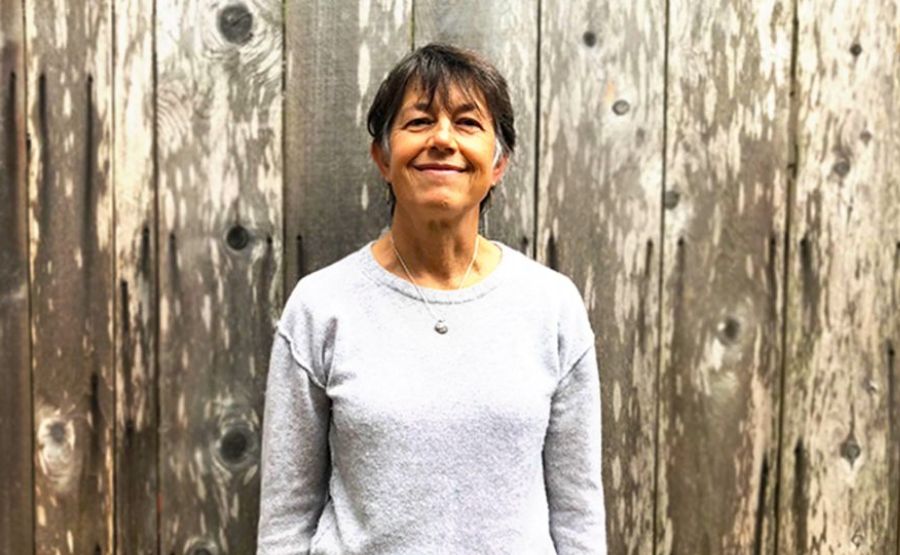
Cindy Paulson matters today not because of what was done to her, but because of what she did back — barefoot, handcuffed, and bleeding — at a gravel airstrip in Anchorage, Alaska, in the early hours of June 13, 1983.
Her escape that morning ended a twelve-year killing spree. It put a serial killer named Robert Hansen behind bars for the rest of his natural life. And it forced a justice system that had discarded her testimony to finally confront what it had ignored.
Quick Bio
| Detail | Information |
| Full Name | Cindy Paulson |
| Born | Circa 1966 |
| Hometown | Yakima, Washington |
| Age at Time of Abduction | 17 years old |
| Date of Abduction | June 13, 1983 |
| Location | Anchorage, Alaska |
| Perpetrator | Robert Christian Hansen (“The Butcher Baker”) |
| Key Detective | Sgt. Glenn Flothe, Alaska State Troopers |
| Film Based on Her Story | The Frozen Ground (2013) |
| Actress Portraying Her | Vanessa Hudgens |
| Current Status | Private life; three sons, multiple grandchildren |
A Childhood Built on a Lie
Before June 1983, Cindy Paulson’s story was already a hard one.
She grew up in Yakima, Washington, in what appeared, from the outside, to be a stable family household with four older sisters. It was not the whole truth. Cindy overheard a talk when she was just nine years old, and it completely upended everything she believed to be true. The woman she had always believed to be her older sister was actually her biological mother. The couple she called her parents were, in fact, her grandparents. The family had kept this secret to avoid the social embarrassment of an out-of-wedlock birth.
“It broke me,” Cindy later said in an interview with People magazine.
That fracture sent her running. Within months of learning the truth, she left home for the first time. She was a child who no longer trusted the adults who were supposed to protect her — a wariness that would, years later, complicate her relationship with the very police officers she turned to for help.
By the time she was fifteen, she had made her way to Anchorage, Alaska. The city was booming. The North Slope oil pipeline had drawn tens of thousands of workers north, and money was moving freely. Cindy entered sex work to support herself. She described her earnings in frank terms: her slowest night brought in $800. Some nights reached $5,000. She was a teenager surviving the only way she had learned to survive — without a safety net.
This background matters. Not because it diminishes what happened to her, but because it explains precisely why the system failed her so badly when she needed it most.
See also “Jackie Witte: The Woman Paul Newman Left Behind — and Never Stopped Feeling Guilty About“
The Night Robert Hansen Picked Her Up
Robert Hansen was not, on the surface, an alarming figure.
He was 44 years old in 1983, a married father of two who ran a bakery in Anchorage and kept a private hunting cabin in the Alaska wilderness. He had a stutter. He was quiet. His neighbors and customers liked him well enough. Beneath that surface, he had been abducting, raping, and murdering women since at least 1971. He flew his victims in a Piper PA-18 Super Cub bush plane to remote terrain accessible only by air, and hunted them there with a rifle.
On the evening of June 13, 1983, Hansen approached Cindy near Fifth and Denali in Anchorage and offered her $200. She got into his car.
What happened next was immediate and violent. Hansen pulled out a gun, put shackles on her wrists, and took her to his Muldoon neighborhood home.His wife and children were traveling in Europe at the time. He chained Cindy by the neck to a coffee table in his basement and sexually assaulted and tortured her for several hours.
Cindy did not go passive. She paid attention.
She memorized details about the house: the bars on the windows, a bullet hole in the floor, the layout of the rooms, the hunting trophies on the walls. Hansen had told her his name was Don. But his real name — Robert Hansen — was printed on those trophy plaques. She remembered that too.
At some point, Hansen fell asleep on a mattress nearby. Cindy pleaded with him when he woke. She told him she lived with her mother and would tell no one. He said he had a plane at Merrill Field airstrip and that they would fly to his cabin and come back. She understood precisely what that meant.
She told Sgt. “I knew I wasn’t going to come back.” Glenn Flothe three months later.
The Escape at Merrill Field
Hansen drove Cindy to Merrill Field Airport in the early morning darkness. His plan was to load her into the bush plane and fly north to his remote cabin near the Knik River — the same location where investigators would later confirm multiple women had been murdered.
Cindy was crouched in the back seat of Hansen’s car, her wrists cuffed in front of her body. Hansen climbed out of the vehicle to prepare the aircraft and turned his back.
She pushed open the rear door and ran.
Barefoot, handcuffed, and bleeding, she sprinted across the gravel runway toward Sixth Avenue. Hansen gave a brief chase but broke off. A truck driver named Robert Yount spotted her on the side of the road, took in the state she was in, and stopped. She asked to be dropped at the Mush Inn but gave no explanation. The driver was alarmed enough to contact the police.
By the time officers arrived, Cindy had taken a cab to the Big Timber Motel. Officer Gregg Baker found her there — visibly shaken, handcuffs still locked on her wrists. She was reluctant to talk, partly because she was afraid she would be arrested for prostitution. But she spoke.
She gave police the make of Hansen’s vehicle, the layout of his home, the location of the airstrip, and the registration number of the plane. She was able to identify the aircraft.
Aviation records matched the plane to Robert C. Hansen of Anchorage. Police had their suspect’s name within hours of the attack.
Then they chose not to pursue him.
The System That Let Him Walk
What happened next is the part of Cindy Paulson’s story that still stings, decades later.
Anchorage Police Department investigators brought Hansen in for questioning. He denied everything. He produced an alibi — a friend named John Henning who claimed Hansen had been with him that evening. Then Hansen said something that an APD officer later recalled under oath: “You can’t rape a prostitute, can you?”
After accepting the alibi, the investigators closed the case.
Cindy was a seventeen-year-old sex worker. Hansen was a married businessman with a bakery and a respectable reputation. The calculus was not complicated, and it was not unusual. Women in Cindy’s position were routinely disbelieved in 1983 law enforcement, and the attitude that circulated through the APD — that her profession invalidated her account — was the prevailing standard, not the exception.
APD eventually asked her to take a polygraph test. When officers went to collect her, she had already left Anchorage.
Rather than close the case, APD forwarded the file to the Alaska State Troopers, who were separately investigating a series of female homicides across the region. The bodies of women — mostly dancers and sex workers — had been turning up in remote areas since the early 1970s. Many remained unidentified. One was known only as “Eklutna Annie.”
It was not a coincidence. It was the same man.
Glenn Flothe and the Second Chance
Sgt. Glenn Flothe of the Alaska State Troopers had been quietly building a parallel file on a serial offender for months when Cindy’s case crossed his desk.
Flothe contacted the FBI for behavioral profiling assistance. The resulting profile described a killer with low self-esteem, a history of rejection by women, a likely stutter, and a compulsion to keep trophies from his victims. The description fits Robert Hansen in nearly every particular.
Flothe tracked Cindy down — she had moved to Portland, Oregon, where she had twice been arrested for solicitation. He earned her trust. On September 27, 1983, Cindy gave Flothe a detailed recorded interview that became the cornerstone of the investigation. During that interview, Flothe asked her to draw a floor plan of Hansen’s house from memory. She drew it. When investigators searched the house weeks later, every detail she had provided was accurate.
That precision — the window bars, the rooms, the bullet hole, the trophy plaques — demolished the idea that she was fabricating a story. This was not the account of a panicked teenager making things up. This was the account of a young woman who had decided, even while trapped in a predator’s basement, to observe everything she could.
Hansen’s two alibi witnesses, once confronted with threats of perjury charges, admitted they had lied. The case reopened.
On October 27, 1983, Flothe executed search warrants on Hansen’s property. Inside the house, investigators found a hidden cache of firearms — including a .223-caliber Ruger Mini-14 rifle later matched to bullets recovered from victims. They found jewelry belonging to murdered women, kept as trophies. And they found an aviation map with dozens of marked locations — each an X marking a spot in the Alaskan wilderness where a body had been buried or left.
The case was solved. Cindy Paulson had solved it.
The Courtroom’s Weight, Sentencing, and Trial
On February 27, 1984, Cindy sat inside an Anchorage courthouse and watched Robert Hansen receive his sentence.
She had chosen to be there. After her escape, she had worked toward sobriety and was, by the time of the trial, drug-free and determined. The author Leland Hale, who documented her story extensively, described driving her to the courthouse and watching her scan the packed room for a safe corner. Her paranoia was real — later understood to be undiagnosed PTSD — but she held her ground.
Hansen, as part of a plea agreement, confessed to the murders of seventeen women and the rape and kidnapping of Cindy Paulson. He agreed to show investigators the locations marked on his aviation map. He was sentenced to 461 years in prison plus life, with no possibility of parole.
Publicly, justice had been delivered. For Cindy, what came next was decades of a different kind of struggle.
The Long Aftermath
The years after the trial did not offer a clean resolution.
Cindy left Anchorage the day after Hansen’s sentencing, had dinner with Flothe and his wife at a restaurant called the Corsair, then returned to a life that remained difficult. She cycled back into sex work. She encountered the criminal justice system again, this time on the wrong side of it. She moved through several states before eventually spending roughly a decade in Mexico, where she learned to speak Spanish fluently.
She became a mother. She had three sons. She became a grandmother. She joined Alcoholics Anonymous and remained sober.
But PTSD — the condition she had been living with since 1983 without a diagnosis — went untreated for years. Part of that gap was institutional. The mental health community was slow to formally recognize that women outside of combat settings could develop the same severe trauma responses as soldiers. Women like Cindy existed in a diagnostic blind spot.
The turning point came when Robert Hansen died on August 21, 2014, of natural causes at age 75 in Anchorage. For Cindy, his death removed a fear she had carried for thirty years: that he might somehow reach her, even from prison. With that fear gone, she was finally able to pursue treatment in earnest.
“It was only after Hansen’s death that she was finally able to feel a sense of relief,” she explained in her first public interview, on the podcast Mind of a Monster.
Going Public: The Story She Kept for Forty Years
For roughly four decades after the trial, Cindy Paulson said almost nothing publicly about what had happened to her.
In 2013, when director Scott Walker released The Frozen Ground — a film based on the Hansen case, starring Vanessa Hudgens as Cindy, John Cusack as Hansen, and Nicolas Cage as a fictionalized version of Detective Flothe — Walker sought Cindy out before production. She agreed to spend time with Hudgens and shared her full personal history, including details she had never disclosed to anyone. Hudgens later described it as one of the most formative research experiences of her acting career. Cindy’s one condition: her husband had to be informed before anything moved forward.
The film dramatized several elements, including a subplot about a contract on Cindy’s life. The core facts — her escape, her testimony, her role in the prosecution — were accurate.
In 2024, Cindy gave her first public recorded interview, to the podcast Mind of a Monster. She discussed her childhood, what led her into sex work, the assault, and the years of police negligence that followed. She spoke with clarity and without performance. She said she believed she had been put on earth for a specific reason — to end Robert Hansen’s killings — and that she had done exactly that.
In May 2026, People magazine published an extensive interview in which Cindy described her life in full, from Yakima to Anchorage to the airstrip to the present. She spoke about her sons and grandchildren. She spoke about sobriety. She spoke about the moment on the gravel runway when a voice in her head told her to run.
She ran. And because she ran, at least some number of women lived who would otherwise not have.
What Her Story Reveals About the System
Cindy Paulson’s case is regularly described as a triumph of investigative work. It was also, first, a catastrophic institutional failure.
She reported the assault immediately. She provided accurate, detailed information about her attacker, his vehicle, his house, and his aircraft.She fulfilled every need for a victim. And the Anchorage Police Department set her file aside because a respectable baker with an alibi was, in the department’s judgment, more believable than a teenage sex worker.
Three months passed. During those three months, Hansen abducted and murdered at least one more woman.
The calculus of whose testimony gets believed — and whose does not — has consequences that are not abstract. In Cindy’s case, they were fatal for someone else.
Detective Flothe has been consistently clear about where the credit for the Hansen prosecution belongs. When Frozen Ground director Scott Walker met with Flothe during his research, Flothe told him directly: “I’m not the hero. Cindy Paulson is the hero, and you need to find her.”
She was the hero. She was also the person the system initially treated as a problem.
Legacy and Life Today
Cindy Paulson today is a grandmother.
She lives a private life, out of public view for most of the year.She has been clean for more than ten years. She is, by her own account, a Spanish-speaker after her years in Mexico, a member of AA, a woman who has built a life on foundations she had to pour herself.
She has three sons. She has grandchildren. She has, in her own framing, a reason she was here: to catch a killer. She caught him. Everything after that has been hers.
Her story continues to circulate in true crime media — podcasts, films, documentary television. She appears to have made a deliberate decision about what to share and what to keep. She does not owe anyone her trauma. The fact that she has chosen to speak, selectively and on her own terms, is its own form of the same courage she showed in 1983.
The seventeen-year-old who ran barefoot across a dark airstrip is now a woman in her late fifties. She has grandchildren. She has survived a childhood built on betrayal, a justice system that dismissed her, a serial killer who tried to take her life, and thirty years of living with undiagnosed PTSD.
That is not a simple story. It is a true one.
FAQs
1. Who is Cindy Paulson?
Cindy Paulson is a survivor from Anchorage, Alaska, who escaped serial killer Robert Hansen on June 13, 1983. Her testimony played a crucial role in his apprehension, conviction, and admission of seventeen killings.
2. How old was Cindy Paulson when she was abducted?
She was 17 years old at the time of the abduction.
3. How did Cindy escape from Robert Hansen?
While Hansen was preparing his bush plane at Merrill Field Airport, Cindy — still handcuffed — pushed open the car door and ran across the gravel runway to a nearby highway, where a truck driver stopped and helped her.
4. Did the police believe her when she came forward?
Initially, no. Anchorage Police Department accepted Hansen’s alibi and dismissed her account, in part because she was a sex worker. Three months elapsed before Alaska State Trooper Sgt. Glenn Flothe reopened the case and took her testimony seriously.
5. What evidence did Cindy provide that proved critical?
She described the layout of Hansen’s home in precise detail, including the window bars and a bullet hole in the floor. She also provided Hansen’s car description, the aircraft registration number, and the airstrip location. A floor plan she drew from memory matched the actual house exactly.
6. How many women did Robert Hansen kill?
Hansen confessed to murdering seventeen women. His crimes spanned from 1971 to 1983. Estimates of total victims range as high as thirty-seven.
7. What was Hansen’s sentence?
On February 27, 1984, he was sentenced to 461 years in prison plus life, without the possibility of parole.
8. When did Robert Hansen die?
Hansen died on August 21, 2014, at age 75, from natural causes at Alaska Regional Hospital in Anchorage.
9. Did Cindy attend Hansen’s sentencing?
Yes. She was present in the courthouse on February 27, 1984, when Hansen was sentenced. She described it as frightening but important to her recovery.
10. What film is based on Cindy’s story?
Scott Walker is the director of The Frozen Ground (2013). Vanessa Hudgens portrayed Cindy, John Cusack played Hansen, and Nicolas Cage played a fictionalized version of Sgt. Flothe. The film was released theatrically and on video on demand in August 2013.
11. How accurate is The Frozen Ground?
The core facts — the escape, the testimony, the role Cindy played in the prosecution — are substantially accurate. Several subplots, including a contract on Cindy’s life and the relationship between Cindy and the investigating trooper, were invented for dramatic purposes.
12. Where is Cindy Paulson today?
She lives privately in the continental United States with her family. She has three sons and multiple grandchildren. She has been sober for over a decade and was formally diagnosed and treated for PTSD after Hansen’s death in 2014.
13. Did Cindy ever speak publicly about her experience?
For roughly forty years, she gave almost no public interviews. Her first major public account came on the podcast Mind of a Monster in 2024. In May 2026, she gave an extensive interview to People magazine.
14. What role did her childhood play in her vulnerability at the time?
Cindy ran away from home at approximately age nine after discovering the truth about her family.By the time she was fifteen, she was living on her own in Anchorage and had turned to prostitution to make ends meet during the oil boom. The same marginalized circumstances that made her vulnerable also contributed to the police initially dismissing her report.
15. What is Cindy Paulson’s broader significance beyond the Hansen case?
When discussing how law enforcement handles survivors from vulnerable populations, her story is often brought up. The gap between her accurate, detailed testimony and its initial dismissal illustrates a systemic failure that is not unique to 1983 Alaska. Sgt. Flothe himself has repeatedly stated that Cindy — not the investigators — was the true reason Hansen was caught.
Explore more, learn more, and think deeper with Theory Magazine.