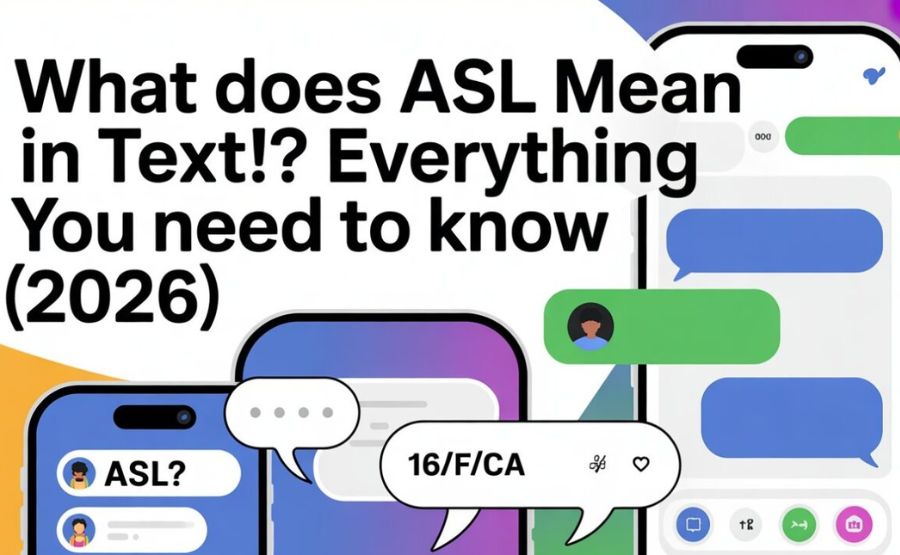
Quick Reference
| Topic | Details |
| Abbreviation | ASL (also written lowercase: asl) |
| Most common meaning today | “As hell” — used to emphasize feelings |
| Original internet meaning | “Age, Sex, Location” — 1990s chatroom question |
| Third meaning | American Sign Language |
| Where “as hell” is most used | TikTok, Snapchat, Instagram, texting |
| Who uses it most | Gen Z, Gen Alpha, online gamers |
| Tone | Casual, informal, playful |
| Example (modern) | “That show was funny asl” = “That show was funny as hell” |
| Example (old school) | “asl?” = “How old are you, what gender, where are you from?” |
| Uppercase vs lowercase | Uppercase ASL often = American Sign Language; lowercase asl often = slang |
Why You’re Confused — And You’re Not Alone
Picture this.
Your friend sends you a message: “That test was hard asl.”
And you sit there staring at it thinking — is that a typo? What’s an asl?
Or maybe someone in a comment section writes “bored asl rn” and everyone is laughing and agreeing, and you have no idea why three random letters are making people nod.
You’re not behind. You’re not missing something obvious. ASL is genuinely one of the most confusing pieces of internet slang because it means three completely different things depending on who’s typing it, how old they are, and which app you’re both on.
This guide covers all of it. You won’t be perplexed by the conclusion.
See also “How to Add Someone to GitHub Repository: Every Method, Fully Explained“
The Newest Meaning: “As Hell” (The One Everyone Uses Today)
Let’s start with the meaning you’ll see the most right now.
When someone types “asl” at the end of a sentence today, they almost always mean “as hell.”
It’s a way to make a feeling sound bigger. Stronger. More dramatic.
Think of it like this — instead of saying “I’m really tired,” you say “I’m tired asl.” Instead of “that was so funny,” you say “that was funny asl.” Same idea, but with more punch.
Here are some real examples of how people use it:
- “That movie was sad asl” → That movie was incredibly sad
- “I’m really bored right now” ⇒ I’m really bored.
- “She’s talented asl” → She is seriously talented
- “That pizza was good asl” → That pizza was really good
- “It’s hot asl outside” → It’s hot as anything out there
See the pattern? The word “asl” almost always shows up after an adjective — a describing word. It tells you just how much of that thing there is.
It’s the lazy genius of internet language. Two syllables. Big feeling. Done.
Where Did “As Hell” Come From?
Here’s the cool part — this meaning didn’t just appear out of nowhere.
“As hell” has been part of spoken English for a very long time. For decades, expressions like “funny as hell” and “mad as hell” have been used. It was never brand-new.
What happened around 2019 and 2020 is that Gen Z spotted something clever. When you say “as hell” quickly out loud, it sounds a lot like the letters A-S-L said fast.
That’s it. That’s the trick.
The sound matched the letters. So younger people started using “asl” as a shorthand for “as hell” in texts and comments. TikTok picked it up. Then Snapchat. Then everywhere.
By the early 2020s, this meaning had completely taken over among teenagers and young adults. The old meaning — which we’ll get to in a minute — started to look ancient by comparison.
The Old Meaning: “Age, Sex, Location” (A Relic from the 1990s Internet)
ASL had a very different meaning prior to all of this.
Travel back to the 1990s. The internet was brand new. Most people were discovering it for the very first time. There were no social media profiles. No Instagram bios. No Snapchat score to judge someone by.
If you wanted to know who you were talking to in a chatroom — on AOL, Yahoo Chat, MSN Messenger — you had exactly nothing to go on. No photo. No name. No city. Just a screen name like “CoolDude99” or “StarGirl2000.”
So people started asking one quick question: ASL?
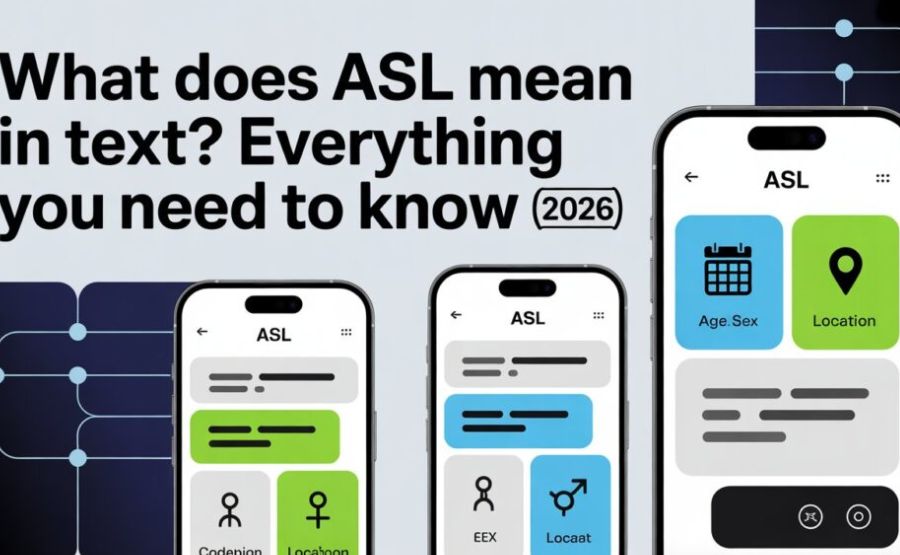
It stood for Age, Sex, Location.
And the person would type back something like: “16/F/Texas” or “22/M/London.”
Just like that, you knew you were talking to a 16-year-old girl from Texas. In three characters and a slash. That was the magic of it.
This was so normal in the late 1990s and early 2000s that almost anyone who was online back then will immediately recognize it. It was the standard internet greeting in chatrooms. The handshake of the dial-up era.
Why the Old Meaning Fell Away
Things changed when social media arrived.
When Facebook launched in 2004, and then MySpace, and then Instagram and Twitter — suddenly everyone had a profile. Your age, location, photo, and interests were all listed right there.
Nobody needed to type “ASL?” anymore. The internet has done that work for you.
The chatrooms faded. The question that had dominated them faded with it.
By the 2010s, asking someone “ASL?” felt weird — like showing up to a party in clothes from twenty years ago. Some people used it ironically, as a joke referencing old internet culture. Most younger people had never encountered it in its original form at all.
That’s when Gen Z rewrote it entirely into something new.
The Third Meaning: American Sign Language
Now here’s the one that has nothing to do with texting slang at all — but it’s important.
ASL also stands for American Sign Language.
This is a complete, real language. It’s not mime. It’s not a code for spoken English. It’s a fully developed, independent language with its own grammar, structure, and expression — used primarily by Deaf and hard-of-hearing communities in the United States and parts of Canada.
ASL has been around since 1817. A teacher named Thomas Hopkins Gallaudet helped bring it to life at the American School for the Deaf in West Hartford, Connecticut. French Sign Language was a major influence, yet it developed into something quite different.
Today, millions of people use ASL. And millions more are learning it — not because they’re Deaf, but because it opens up communication across a whole community of people. To communicate with Deaf friends, family, and coworkers, many hearing individuals learn it.
So if you’re reading about language, education, disability rights, or communication — and you see the letters ASL — that’s almost certainly American Sign Language being discussed. Nothing to do with age, sex, and location. Nothing to do with “as hell.”
Context always tells you which one it is.
How to Determine a Person’s Meaning
This is the question everyone has. To be honest, it’s not as difficult as it seems.
Here’s a simple way to figure it out every single time:
Is “asl” sitting at the end of a sentence, after a describing word? → It means “as hell.” 100%. “That song is fire asl” = “That song is fire as hell.”
Is “ASL?” showing up alone, like a question, from someone you just met online? → It probably means “age, sex, location.” That’s the classic chatroom question. “ASL?” from a stranger = they want to know how old you are, your gender, and where you live.
Is the conversation about language, education, Deaf culture, or signing? → It means American Sign Language. Every time. “She’s learning ASL” = she’s studying American Sign Language.
One more quick tip. Pay attention to the case.
Lowercase “asl” at the end of a sentence almost always means “as hell.” Uppercase “ASL” alone, or in a more formal sentence, is more likely to mean American Sign Language or the old chatroom question.
This isn’t a perfect rule, but it works about 90% of the time.
Where You’ll See It Most Right Now
Different platforms have different habits with this word.
TikTok is where “asl” as “as hell” lives and breathes. Comments are full of it. “This is relatable asl.” “That reaction was funny asl.” The short, punchy format of TikTok loves short, punchy slang.
Snapchat is where both meanings still mix. Friends use “asl” for emphasis all day. But because Snapchat also has a culture of meeting new people, you’ll occasionally still see “ASL?” pop up in a new conversation.
Instagram comment sections use it like TikTok — almost always as “as hell.”
Discord and gaming chats love it too. Players might say “that boss was hard asl” or “this lag is annoying asl.”
Text messages between friends — this is where it shows up the most casually.”I’m hungry asl, where are we eating?” is a text message from a friend. they’re not asking you to help them fill out a form. They’re just very hungry.
Is It Safe? The Honest Conversation About “Age, Sex, Location”
This part is worth talking about directly.
The old “ASL?Millions of people who were merely attempting to make new friends online utilized the “question,” which asked for their age, sex, and location. That was and is true.
But it was also used by people with bad intentions. Someone asking a teenager for their age, gender, and location in a private chatroom could be trying to find out who to target and where to find them.
This is why, if your child is online and someone they don’t know sends “ASL?” — it’s worth a conversation. Don’t panic. Not an emergency. But a calm, clear talk about the fact that sharing your real age, gender, and location with internet strangers is not something to do automatically.
The good news is that the “age, sex, location” meaning is genuinely rare now. Most young people never use it that way at all. But it’s not completely gone, especially in anonymous chat spaces and certain forums.
If you’re a parent, the more likely thing your teenager is doing is adding “asl” to sentences because they think it sounds cool — because it does, and it’s harmless.
The Bigger Picture: Why Slang Keeps Changing
ASL is a flawless example of how language functions.
It started as a practical shortcut — three questions squeezed into three letters. Then the world changed and made that shortcut unnecessary. Then a new generation found those same three letters and made them mean something completely different.
This happens constantly with internet slang. Words get borrowed, bent, flipped, and recycled. What meant one thing in 2003 means something else entirely in 2023. What’s common today might feel ancient by 2028.
That’s not a problem. That’s language being alive.
The important thing is knowing your context. Who’s writing it? Where are you reading it? What’s the sentence around it? Those three questions answer what ASL means faster than any dictionary.
Alternatives to “asl” (In Case You Want to Mix It Up)
If “asl” feels like the right energy but you want other options, here are similar intensifiers people use:
- “af” — short for “as f*ck” — same purpose, different letters. “I’m tired af.”
- “For real” or “fr” indicates that you mean it. “That was hard fr.”
- “lowkey” — suggests something quietly. “I lowkey loved that.”
- “highkey” — the loud, obvious version. “I screamed when that happened.”
- “deadass” — means you’re completely serious. “I’m deadass exhausted right now.”
All of these live in the same neighborhood as “asl.” They’re tools for emphasis. Ways to turn up the volume on a feeling without writing a whole sentence about it.
Final Words
ASL is just three letters, but those three letters carry a whole history of how the internet grew up.
First it was a stranger’s question in a dark corner of a chatroom. Then it got a new life as something funnier and more expressive. And somewhere above all of that, it’s always been the name of a real, rich language used by millions of people every single day.
Knowing which meaning fits the moment is a small skill that makes a big difference. It keeps you from looking confused in a TikTok comment section. It keeps you from accidentally answering a weird question from a stranger. And it helps you appreciate that language never really stops moving.
Next time you see “asl” in a text, you’ll know exactly what to do.
FAQs
1. What does ASL most commonly mean in texts today?
In 2026, the most common meaning is “as hell.” When someone writes “asl” at the end of a sentence — like “tired asl” or “funny asl” — they’re using it to make the feeling sound stronger and more dramatic. This usage is especially common among Gen Z on TikTok, Snapchat, and in everyday texting.
2. What did ASL originally mean on the internet?
It stood for Age, Sex, Location. Back in the 1990s and early 2000s, people in online chatrooms would type “ASL?” to quickly find out three basic things about whoever they were talking to. Someone might respond “17/F/California” to give their age, gender, and city all at once.
3. Can ASL mean American Sign Language?
Yes. American Sign Language is actually the oldest meaning of ASL and is a complete, real language used primarily by the Deaf community in the US and Canada. If you’re reading anything related to education, language, disability, or communication, ASL almost certainly refers to American Sign Language.
4. How do I know which meaning someone is using?
Look at the context. If “asl” comes at the end of a sentence after a describing word, it means “as hell.” If it appears alone as a question from someone you just met, it likely means “age, sex, location.” If the topic is language or Deaf culture, it means American Sign Language.
5. Is lowercase “asl” different from uppercase “ASL”?
Usually, yes. Lowercase “asl” in casual sentences almost always means “as hell.” Uppercase “ASL” by itself, especially as a question or in formal writing, is more likely to mean American Sign Language or the original chatroom question.It’s not a rule, but it’s a useful hint.
6. Why did Gen Z start using “asl” to mean “as hell”?
The phrase “as hell” sounds very similar to the letters A-S-L when spoken quickly. Gen Z noticed that connection and started writing “asl” as a faster, shorter way to type “as hell.” TikTok spread it widely, and now it’s a normal internet language.
7. Is it appropriate to use “asl” in messages?
With friends in casual conversations, yes — it’s completely normal and widely understood. Avoid it in professional messages, school emails, or anything formal. In those settings, it would look confusing at best and unprofessional at worst.
8. Should I be worried if a stranger asks my child “ASL?”
It’s worth a calm conversation. The question itself isn’t automatically dangerous, but sharing personal details like age, gender, and location with strangers online is something kids should approach carefully. Teach them that they don’t have to answer. If anything about the conversation feels weird, they should tell a trusted adult.
9. Do adults ever use “asl” the Gen Z way?
Yes, more and more. Slang that starts with teenagers often spreads to older age groups within a few years. Many adults in their 20s and 30s now use “asl” casually, especially in texts with younger friends or family.
10. Is “asl” the same as “af”?
They work the same way — both are placed after adjectives to add emphasis. “af” stands for “as f*ck.” “asl” stands for “as hell.” The difference is that “asl” is a bit softer and more widely used in mixed company, while “af” is slightly stronger in tone.
11. Can “asl” be used positively and negatively?
Absolutely. It’s just an intensifier. It works for good things: “That concert was amazing asl.” And it works for bad things: “That traffic was annoying asl.” The word itself has no positive or negative charge — it just turns up the volume on whatever feeling comes before it.
12. Are there other meanings of ASL beyond these three?
In some gaming and tech communities, ASL occasionally stands for “All Systems Live” — meaning everything is running and active. This is very niche and uncommon. For the vast majority of text conversations, you only need to know the three main meanings covered in this article.
13. Do other countries use “asl” the same way?
Mostly yes, at least for the “as hell” meaning — because TikTok, Snapchat, and Instagram are global. The “age, sex, location” meaning was also global in chatroom culture. The American Sign Language meaning is specific to North America, though ASL is studied and recognized worldwide.
14. Is “asl” going to stick around or fade out?
No one can predict internet slang perfectly. But “asl” has two things going for it: it’s short, and it fills a real purpose — making feelings sound stronger without extra words. Slang with real utility tends to last longer than random trends. It has already outlasted countless other abbreviations from the 2010s, so it seems like it’s here to stay for a while.
Explore more, learn more, and think deeper with Theory Magazine.