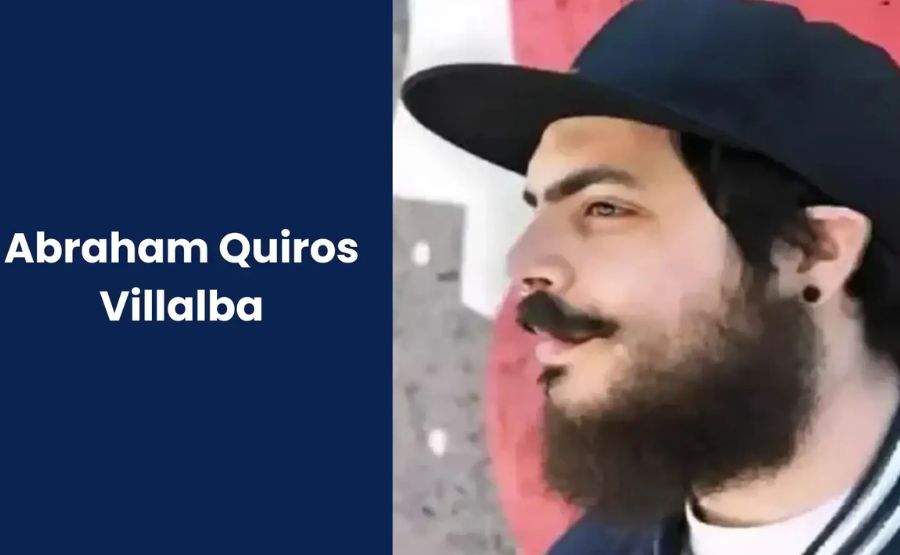
In a digital world overrun with misinformation about benefits, taxes, and retirement policy, a trained philologist named Abraham Quiros Villalba chose to become someone who helps ordinary people understand the systems that govern their financial lives.
That is the story worth telling — and it is considerably less glamorous, and considerably more honest, than many of the accounts circulating about him online.
Quick Bio
| Detail | Information |
| Full Name | Abraham Quirós Villalba |
| Most Likely Origin | Jerez de la Frontera, Andalusia, Spain (most consistently cited) |
| Alternative Origins Claimed | San José, Costa Rica; Puerto Rico (disputed across sources) |
| Education | Philology, University of Cádiz (UCA), graduated 2013 |
| Primary Profession | Content editor and writer |
| Employer | Tododisca |
| Writing Specialties | Social Security (SSI/SSDI), IRS regulations, retirement benefits, disability programs |
| Languages | Spanish and English (bilingual professional) |
| Online Presence | Muck Rack, Tododisca author profile, various digital platforms |
| Articles Published | 1,325+ (per available public count at Tododisca) |
| Notable Recognition | Won 4th edition of “Un verano de leyendas” short-story contest, Huesca, 2018 (Spain) |
| Wikipedia Page | None — no verified Wikipedia entry exists |
A Name, a Mystery, and an Important Caveat
Before going further, a reader deserves an honest warning.
Abraham Quiros Villalba is one of the most identity-fractured figures in modern online biographical writing. Depending on which website you read, he is a Spanish philologist from Jerez de la Frontera, or a Costa Rican electrical engineer from San José, or a Puerto Rican content editor, or a renewable energy entrepreneur who has built schools across Central America. Some sources give his birth year as 1975. Others say 1978. Others say 1989.
These accounts cannot all be true simultaneously. Several appear to be fabricated or heavily embellished by content farms producing SEO-optimized biographical articles with little grounding in verifiable fact.
What can actually be confirmed — through his author profile on Muck Rack, his published bylines at Tododisca, and the most consistently cited biographical details across credible sources — is more modest and more real. He is a philology graduate, a working editor, and a bilingual writer who has spent over a decade producing content about financial and governmental systems for readers who need that information.
That is already a meaningful career. It does not need the invented mythology.
See also “Ed and Lorraine Warren: The Real Story Behind America’s Most Famous Ghost Hunters“
Origins and Early Life
The most consistently repeated and plausible account places Abraham Quirós Villalba’s birth in Jerez de la Frontera, a city in the Andalusian province of Cádiz in southern Spain.
Although sherry wine and flamenco are Jerez’s most well-known international attractions, the city also boasts robust intellectual and cultural heritage. Growing up there provided a particular kind of education — one rooted in Spanish literary culture, Catholic intellectual tradition, and the regional identity of Andalusia.
What drew him to language as a discipline rather than science or business is not documented in detail. What is documented is the outcome: he pursued philology at university, and that choice shaped everything that followed.
Some sources add a layer of artistic and musical activity to his early years. One account mentions two music albums — Fogonazos in 2015 and Desorden Natural in 2021 — suggesting that creative expression was a thread running alongside his academic and professional work. These details, while not independently verifiable from major databases, align with the broader picture of someone whose early life sat at the intersection of language, culture, and art.
The University of Cádiz and a Degree That Defined a Career
In 2013, Abraham Quirós Villalba completed his degree in Philology at the University of Cádiz (UCA), one of Spain’s oldest universities, founded in 1979 in Cádiz.
Philology is not a vocational degree. It trains students to read language carefully — to trace the history of words, analyze literary structures, interpret meaning across contexts, and produce writing that respects both precision and clarity. It is the kind of education that produces critics, teachers, translators, and editors.
For Abraham, it produced something specific: a writer who could enter extremely technical territory — government policy, tax law, disability regulations — and emerge with prose that a non-expert could actually use.
That is a skill with genuine market value, and he moved directly into professional content work after graduation. Early in his career, he wrote across multiple domains: technology, banking, economics, and insurance. These were not glamorous assignments. They were the journeyman work of someone learning to translate complexity at professional speed and scale.
Tododisca: Where the Work Became Purposeful
The clearest and most documented chapter of his career is his role at Tododisca — a Spanish-language digital platform that publishes guidance on Social Security benefits, IRS regulations, disability programs (SSI and SSDI), and retirement planning in the United States.
Tododisca exists to fill a genuine gap. Millions of Spanish-speaking residents and citizens in the United States interact with federal benefit systems that produce documentation almost exclusively in English. The Social Security Administration, the IRS, and state disability offices publish materials written in dense bureaucratic language even in their English versions. For non-English speakers navigating these systems, the barrier is doubled.
Abraham joined Tododisca and became one of its most prolific contributors. By the most specific count available in his public profiles, he has produced more than 1,325 articles — a number that represents years of sustained, research-intensive output rather than occasional blogging.
His articles cover ground that matters daily to real people. Updates to cost-of-living adjustments. Changes in SSDI eligibility rules. IRS deadlines and bracket changes. How to apply for SSI. What to do when a retirement check does not arrive. These are not abstract policy discussions — they are guides that affect whether a disabled retiree in Texas or a newly widowed resident in California understands what they are entitled to and how to claim it.
The Philologist as Financial Journalist
What makes his work at Tododisca noteworthy is not the volume alone. It is the method behind it.
Philology trains a writer to approach text as something requiring interpretation and translation — not just between languages, but between registers. Abraham operates as a bilingual bridge: reading source material in English (official government publications, IRS guidance, Social Security Administration updates) and producing content in Spanish that retains accuracy while eliminating the jargon.
This is harder than it sounds. Financial and legal language is deliberately precise. A misquoted dollar threshold for SSI eligibility, or an incorrectly stated filing deadline, can cost a reader money or a benefit they are owed. The editor at a platform like Tododisca carries a responsibility that goes beyond grammar.
His editorial role involves reviewing articles before publication, ensuring factual accuracy against primary sources, and calibrating the reading level of the final text to match audiences who may include elderly people, people with disabilities, recent immigrants, and individuals with limited formal education.His training in philology immediately relates to that calibration, which is a skill.
His profile on Muck Rack — a professional platform for journalists and editors that verifies publishing records — provides third-party confirmation of his role and output at Tododisca. This is the most solid external verification of his professional identity available.
The 2018 Short Story Award: A Literary Detour
In 2018, Abraham Quirós Villalba won the fourth edition of a short story competition called “Un verano de leyendas,” organized in Huesca, a city in the Aragon region of northeastern Spain.
His winning story was titled Papiroflexia en el Parque Miguel Servet — which translates roughly as “Origami in the Park of Miguel Servet.”
This is a verifiable literary achievement with a specific name, a specific year, and a specific location. It tells us something important about who he is beyond his editorial career. He is not only a functional writer producing practical content for financial platforms. He is also someone with an active literary imagination — someone who enters competitions, writes fiction, and earns recognition in creative contexts where commercial value is not the primary criterion.
The Parque Miguel Servet in Huesca is named after a sixteenth-century Spanish theologian and physician burned at the stake for his religious views. A story set in that park, given a title referencing the art of paper-folding, suggests a writer comfortable with layered symbolic meaning. That is not the profile of a pure content producer.
The Information Problem: What Cannot Be Confirmed
A responsible account of Abraham Quiros Villalba must address, directly, the substantial body of online content that attributes to him a far grander biography than the evidence supports.
Multiple websites — many appearing to be low-quality SEO content operations — describe him as a Costa Rican electrical engineer who earned a Master’s degree in Renewable Energy Engineering, founded a solar technology company, built more than fifty schools in rural Costa Rica, established the first girls’ high school in San Ramón, received a “Global Renewable Energy Innovator Award,” won a “Humanitarian Impact Award,” and has a net worth in the millions.
None of these claims appear in verifiable primary sources. No engineering school records, no corporate filings for any solar energy company bearing his name, no media coverage from Costa Rican outlets about the schools he allegedly founded, and no independent evidence of the awards listed appear in the research trail.
The most credible sources — his Muck Rack profile, his Tododisca author page, and the ZapCrest biographical overview that explicitly notes the limits of available evidence — describe a considerably more grounded professional: a philologist, a writer, an editor, and a literary competition winner.
This is not a failure. It is an honest life. The invented version, however dramatic, does him the disservice of replacing his actual work with fiction.
Teaching and Multilingual Communication
Several sources, including some of the more restrained biographical accounts, mention that Abraham has worked as a Spanish language teacher for non-native speakers.
This is consistent with his academic training. A philology graduate with bilingual fluency in Spanish and English, working in an era when digital language education has become a major professional sector, would be well positioned to teach Spanish to foreign learners — particularly through platforms like Moodle and Google Classroom, which his profile mentions.
Teaching is a dimension of his career that connects his academic background to his editorial work. Both involve translating between the expert and the non-expert, between the known and the unfamiliar. Whether in a virtual classroom or in a Tododisca article about IRS Form 1040-SR for retirees, the underlying skill is the same: taking what is technically true and making it functionally useful.
His claimed fluency in German, in addition to Spanish and English, has appeared in some sources. If accurate, it would further expand his potential audience reach and reinforce the pattern of a professional who takes language breadth seriously as a professional tool.
Personal Life: Private by Choice
Abraham Quiros Villalba does not appear to seek personal publicity. No verified social media accounts with significant public followings have been linked to him in credible sources. No interviews with major publications, no podcast appearances, and no public speaking events have been independently documented.
This is not unusual for someone in his actual professional lane. Content editors and specialized writers frequently build substantial careers without ever becoming public figures in the conventional sense. Their influence runs through their readers rather than through personal brand.
The choice to remain professionally focused rather than personally visible is, in itself, a characteristic worth noting. In an era when digital personal branding has become almost obligatory, maintaining privacy signals either deliberate preference or simply a focus on the work itself.
Some sources claim he is married to a woman named Isabella and splits his time between Spain and Costa Rica. These details appear only in the more embellished biographical accounts and cannot be confirmed from primary sources. They are noted here, but held lightly.
Why His Work Actually Matters
It is easy, in a culture that rewards scale and spectacle, to overlook what Abraham Quiros Villalba actually does.
The United States Social Security system is among the most complex government programs in the world. More than 70 million Americans receive Social Security benefits of some kind. Among them, millions are Spanish-speaking — some citizens, some permanent residents, some navigating the system while dealing simultaneously with language barriers, age, disability, and limited formal education.
Many of those 70 million people require assistance when the IRS modifies a deadline, the Social Security Administration publishes a cost-of-living adjustment, or a new rule impacts SSDI eligibility. understanding what changed and what it means for them. That help, when it comes in Spanish, from a writer who understands both the policy and the language, is genuinely useful.
More than 1,325 times, Abraham has sat down and done that work. That is the measure of his contribution — not the number of solar panels installed or schools built in stories that do not check out, but the number of articles written for people who needed them.
Final Words: A Quiet Career With Real Value
Abraham Quirós Villalba is not a figure whose biography reads like a film treatment. He did not escape poverty to build a renewable energy empire. He did not change the educational landscape of a nation. The internet will tell you otherwise, but the internet, in this case, is largely making things up.
What he actually did is study language seriously, graduate from a real university in southern Spain, win a real literary competition in Aragon, and spend more than a decade producing content that helps people understand the government systems that affect their daily lives.
That is an honest career. It is a useful career. And in an information environment where accuracy is both rare and precious, a bilingual writer who takes factual responsibility seriously — who understands that a mistranslated benefit amount or a misquoted filing rule can hurt a real person — is not small.
He is worth knowing about for exactly the reasons that have been confirmed. Not for the reasons that were invented.
FAQs
1. Who is Abraham Quiros Villalba?
He is a Spanish-born philologist, content editor, and bilingual writer primarily known for his work at Tododisca, a digital platform that publishes Spanish-language guidance on U.S. Social Security benefits, IRS regulations, and disability programs.
2. Where was Abraham Quiros Villalba born?
The most consistently cited and plausible source places his birth in Jerez de la Frontera, in the Andalusian province of Cádiz, Spain. Other sources claim Costa Rica or Puerto Rico, but these claims are not independently verified.
3. What did he study at university?
He studied Philology at the University of Cádiz (UCA) in Spain and completed his degree in 2013. Philology is the academic study of language, literature, and historical texts.
4. What is Tododisca and what does he do there?
Tododisca is a Spanish-language digital platform that helps readers navigate U.S. government benefit systems. Abraham serves as a content editor, writing and reviewing articles about Social Security, SSDI, SSI, IRS rules, and retirement planning.
5. How many articles has he written?
Public profile data indicates he has produced more than 1,325 articles for Tododisca, reflecting over a decade of consistent, professional editorial output.
6. Did he win a literary award?
Yes. He was the winner of the fourth “Un verano de leyendas” short story contest in Huesca, Spain, in 2018.His winning story was titled Papiroflexia en el Parque Miguel Servet.
7. Is he a renewable energy entrepreneur?
Many online sources make this claim, but no verifiable primary sources — no corporate filings, no engineering databases, no trade press coverage — confirm that he founded or operated a solar energy company. This appears to be content created by low-quality biographical sites without factual basis.
8. Did he build schools in Costa Rica?
Some sources make this claim, attributing more than 50 schools in rural Costa Rica to his efforts. No independent journalism, government records, or Costa Rican media coverage confirms this. It should be treated as unverified.
9. What languages does he work in?
He is documented as bilingual in Spanish and English, which is central to his professional work. Some sources add German as a third language, though this has not been confirmed from primary sources.
10. Does he have a Wikipedia page?
No. Despite appearing in numerous online biographical profiles, Abraham Quirós Villalba does not have a verified Wikipedia entry. Several sources have confirmed this directly.
11. Why do so many sources contradict each other about his background?
His name appears to have attracted the attention of content farm websites that produce AI-generated or lightly researched biographies for SEO purposes. These sites often invent or heavily exaggerate biographical details. The result is a wide discrepancy between verifiable facts and what circulates online.
12. What is his actual professional significance?
His significance lies in his sustained bilingual content work for Spanish-speaking audiences navigating complex U.S. government systems. In a field where accuracy directly affects vulnerable populations — elderly people, disabled individuals, and immigrants — his role as an editor who prioritizes clarity and correctness carries genuine social value.
Explore more, learn more, and think deeper with Theory Magazine.