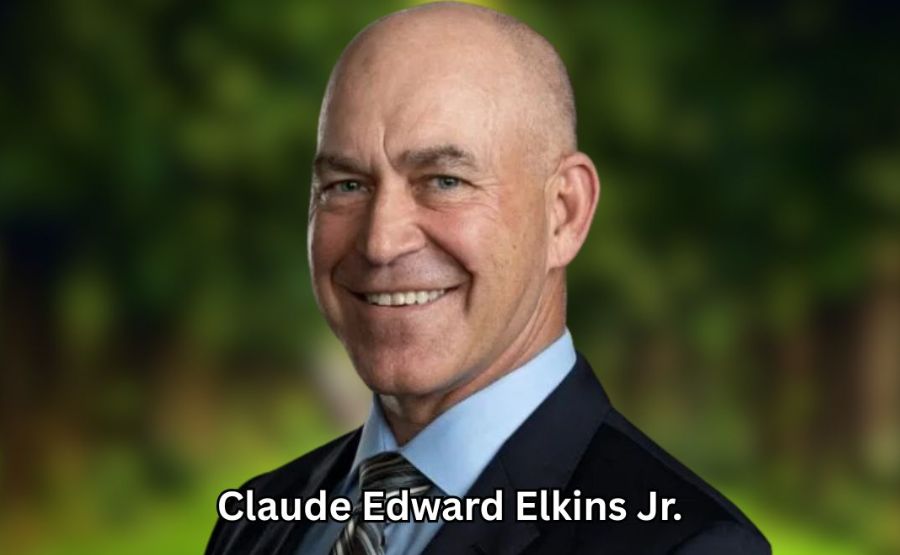
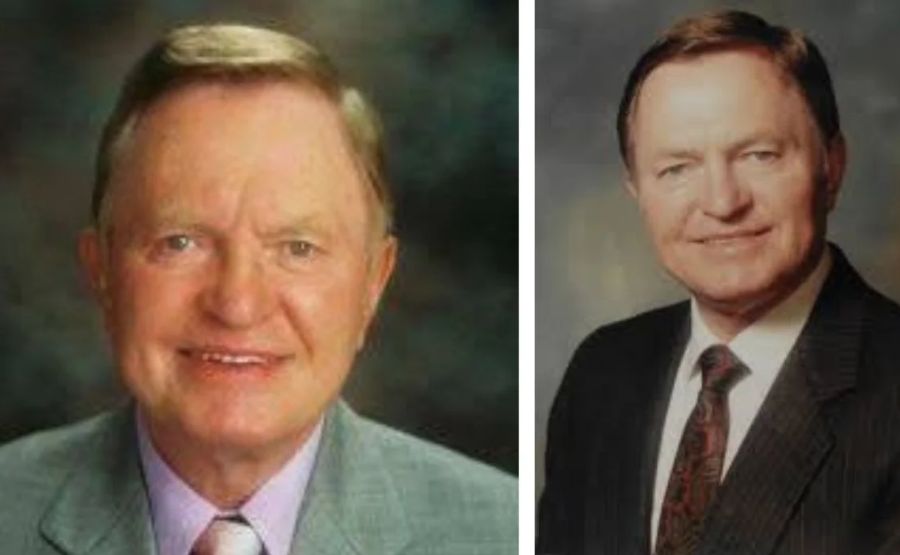
Elmer Heinrich matters today because he turned a single idea — that modern soil has lost its minerals — into a business empire spanning seven countries and four decades. He is not a household name. But millions of people have seen his face on a bottle of Immuno 150, and far fewer know the strange, restless life behind it.
Important note on sourcing: Much of what exists online about Elmer Heinrich comes from his own company website, from SEO-driven “net worth” articles that recycle each other’s claims almost word for word, and from scattered customer reviews. Independent journalism on him is thin. I’ve tried to separate what’s documented from what’s merely repeated, and I flag where the record gets shaky.
Quick Bio
| Category | Detail |
| Full name | Elmer G. Heinrich |
| Nickname | “Mr. H” |
| Born | March 9, 1934, Grinnell, Kansas, USA |
| Parents | Governor Gaberial Heinrich and Heinrich, Mary Katherine (Engel) |
| Education | Fort Hays State University, started 1954 |
| First marriage | May 14, 1954, Verlene Louise Hoover (divorced May 1966) |
| Children (first marriage) | Patricia, Larry, Judy, Cathy |
| Second marriage | Shirley Ann Tolson, November 4, 1966 |
| Child (second marriage) | Rocky |
| Known for | SenTraMin colloidal minerals, Immuno 150 supplement, Liquid Assets Inc. |
| Companies founded/led | S&H Drilling, The Hotsy Corporation, Robo car wash systems, The Rockland Corporation, Liquid Assets Inc., Exceptional Health Products |
| Listed in | The Who’s Who of American Inventors and American Finance and Industry by Marquis |
| Reported net worth | Disputed — claims range from roughly $10 million to $75 million |
| Reported residence | Jupiter, Florida (per some sources); business based in Broken Arrow, Oklahoma |
A Childhood Built on Hard Ground
Elmer Heinrich was one of seven children. He grew up on a farm on the high plains of western Kansas. By his own account, his family lived for a time in a converted railroad boxcar.
That detail matters. It explains the rest of his story. A man who starts there doesn’t fear risk the way people raised in comfort do.
He learned to drill water wells as a teenager, working part-time for a local driller. That skill would resurface later and change his life.
See also “Eduardo Tamayo G.: The Ecuadorian Journalist Who Covered Latin America’s Conscience“
The Gas Station That Wouldn’t Lose
At 20 years old, Heinrich opened a gasoline station in a small western Kansas town. The town had 1,200 residents and eight competing stations already in business.
Within three years, seven of those eight competitors had closed or changed hands. Heinrich had simply outworked and out-sold them.
He later said he borrowed $50 just to stock the cash register on opening day. That’s the kind of number that either gets exaggerated in retelling or tells you exactly how close to the edge he was operating.
Drilling Wells, Then Drilling Faster
After the gas station, Heinrich partnered to buy a bankrupt irrigation well-drilling company. It came fully equipped, sitting idle.
He put the rigs to work in Nebraska almost immediately. Within twelve days, the operation had earned enough profit to pay off the loan used to buy it.
He ran the company for six years, doing nearly every job himself — rig operator, salesman, pump installer, supervisor. Under his hand, it grew into one of the larger irrigation drilling operations across Kansas, Colorado, Nebraska, and South Dakota.
Then he sold his stake to his partner and walked into an entirely different industry.
Insurance: A Record-Setting Rookie
Heinrich became a life insurance salesman, mostly to sharpen his selling skills. On his very first sales call, he sold a $400,000 whole life policy — an enormous figure for that era.
Within his first year, he had reportedly insured 412 lives and sold $7 million in life insurance, setting a national rookie record. Seven months in, he became a state sales manager in Colorado.
He stayed just long enough for his renewals to vest — three years — then resigned. The insurance chapter had served its purpose: it taught him how to sell anything to anyone.
Pressure Washers, Car Washes, and a Brush with the Clintons
With his insurance commissions behind him, Heinrich formed a steam-cleaning and pressure-washer company that became The Hotsy Corporation. Under his sales leadership, it grew into one of the largest companies of its kind in the world.
He sold Hotsy to a wealthy Denver trucking family but stayed on as national sales manager for two more years under the deal terms. Then he moved to Arkansas.
There, he bought controlling interest in a struggling public company that made pressure washers and the “Robo” automatic car wash system. The company was close to bankruptcy, weighed down by internal theft, mismanagement, and lawsuits.
Heinrich tightened security, cut costs, and pushed sales — and the company recovered. During this period, its legal counsel was the Rose Law Firm in Little Rock, Arkansas. Its attorneys reportedly included Hillary Rodham Clinton, Vince Foster, and Webb Hubbell — years before any of them became nationally known. It’s a strange historical footnote, and one of the more independently verifiable threads in his story, since all three lawyers are well-documented public figures.
The Pivot That Defined His Later Life: Minerals
After conflicts with the Rose Law Firm, Heinrich left Robo and moved to Tulsa, Oklahoma. He built a 76,000-square-foot facility there under a new venture, The Rockland Corporation, to manufacture and distribute nutritional supplements.
In 1983, he was introduced to plant-derived colloidal minerals — and something about the idea hooked him. He spent the next several years studying it.
By 1986, he had opened his own mineral mining operation in Utah. The raw material was mined there, then shipped to Tulsa for final filtering and packaging.
This is the business that would define the rest of his life: Liquid Assets, Inc., later operating as Exceptional Health Products, based in Broken Arrow, Oklahoma.
SenTraMin and Immuno 150: The Products Behind the Name
SenTraMin became his core mineral ingredient, marketed as a blend of more than 70 plant-sourced minerals drawn from ancient deposits in the Utah mountains. Immuno 150 became his flagship supplement, combining those minerals with ingredients like psyllium husk and D-ribose.
The pitch is straightforward and consistent across decades: modern soil has been depleted, modern food is less nutritious than it used to be, and minerals fill the gap. He turned that argument into a 190-page book, Mr. H and the Untold Truth, after roughly 40 years of personal research into soil depletion.
His products reportedly reached customers in 27 countries, distributed through warehousing arrangements in Canada, Australia, New Zealand, Germany, and the UK. He also said he built or ran businesses across seven countries total, including a cancer treatment hospital in Rosarito, Mexico, operated for more than six years.
That hospital detail is worth sitting with. Operating any cancer-treatment facility under an “alternative health” banner invites real scrutiny — and independent verification of what it actually offered patients is not available in the public record I could find.
A Life That Refused to Sit Still
Heinrich’s hobbies tell you almost as much about him as his businesses. He made his first parachute jump from 9,000 feet without a static line, with no prior jump experience.
He bought his first airplane, had never flown before, and flew solo within four hours of purchase. The next day, he flew cross-country into Denver’s Stapleton airport.
He went on to log roughly 1,800 flight hours and earn an instrument rating. He also captained his own 70-foot, 3,000-horsepower yacht through the Bahamas and south Florida for six years, and competed in eight World Amateur golf tournaments plus two Honda Classic Pro-Am events.
This is not the profile of a cautious man. It’s the profile of someone who treats risk as a hobby, in business and in life alike.
Sports Connections and Public Recognition
Heinrich has said he held promotional contracts with NFL Hall of Famer Joe Namath and quarterback Charlie Batch, and that he was associated with Doug Williams, the Super Bowl-winning quarterback for Washington. He was featured in the February 2001 issue of Fortune Small Business.
He was also listed in Marquis’s Who’s Who in American Inventors and later Who’s Who in American Finance and Industry, plus Who’s Who in the South and Southwest. These are real listings, though it’s worth knowing that Marquis Who’s Who entries are typically self-submitted and paid, not editorially vetted achievements in the way a journalism award would be.
The Other Side of the Ledger: What Customers Say
Here is where the picture gets less flattering, and a complete portrait has to include it. Customer reviews of Immuno 150 on Trustpilot are sharply divided.
Some buyers report real, specific benefits — less joint pain, more energy, better sleep, medications discontinued. Other reviewers describe months of no improvement at all, or side effects like persistent itching and insomnia.
A recurring complaint is logistics: charges processed weeks before products ship, slow customer service, and difficulty getting refunds. One reviewer called the company’s response to a shipping delay “needlessly rude.” Another flagged a labeling error on the bottle itself — a misspelled product name and a vitamin D dosage unit error.
There are also reports of counterfeit versions sold through Amazon, which the company has reportedly disowned, telling at least one customer that anything sold there under the name isn’t genuine. And a persistent online rumor claims Heinrich has died — a claim that, as of this writing, I could not verify or debunk through any credible source.
The Scientific Skepticism Around Colloidal Minerals
No honest account of Elmer Heinrich’s career can skip past this: the broader scientific and medical community does not view colloidal mineral supplements the way his marketing does. Quackwatch, a long-running consumer health watchdog, has specifically described claims behind colloidal mineral products as having no solid evidence that mineral deficiency is a widespread cause of disease.
Mainstream medical reviews echo that caution. There’s no good evidence that “colloidal” minerals absorb better than minerals from food or standard supplements, and some colloidal products carry contamination risks from heavy metals naturally present in the mined source material.
This doesn’t mean Heinrich’s products are fraudulent in a legal sense — dietary supplements operate under far looser FDA rules than drugs, and that’s true industry-wide, not unique to him. But it does mean the core scientific premise of his life’s work — soil depletion as “the root of all disease,” as his own book title puts it — sits outside what most nutrition researchers would call established science.
How Rich Is He, Really?
This is genuinely unclear, and I want to be honest about that instead of picking a flattering number. Different “net worth” articles — most of which appear to draw from the same handful of recycled facts — cite figures anywhere from $10 million to $75 million, with one estimate splitting the difference around $45–55 million.
None of these figures come with visible documentation: no tax filings, no audited statements, no court records. Instead of using confirmed financial facts, they seem to be guesses based on his self-reported business history. Readers should treat any specific dollar figure attached to his name with real skepticism.
The Man Behind the Pitch
Heinrich has described his own business philosophy simply: never mistreat an associate or a customer, trust your instincts, work hard, and never trade integrity for growth. It’s a clean line, the kind that reads well in a press release.
The customer complaints above complicate that self-portrait, at least on the operational side of the business. A company can have a founder who genuinely believes in his product and still run a checkout-to-shipping process that frustrates people.
Both things can be true. That tension — sincere belief paired with a business that doesn’t always deliver smoothly — may be the most honest single sentence anyone can write about him.
Final Words
Elmer Heinrich’s life reads like a string of unrelated careers: gas stations, well drilling, insurance, pressure washers, car washes, and finally minerals. But there’s a single thread running through all of it — a man who moves fast, bets on himself, and rarely looks back.
He turned an obscure idea about soil chemistry into a global supplement business, reportedly built across 27 countries. Whether that business rests on solid science is a separate question from whether it made him a skilled and relentless salesman — and the evidence says clearly yes to the second question, while leaving the first one genuinely contested.
What’s certain is this: from a railroad boxcar in Grinnell, Kansas, to a mineral mine in Utah, Elmer Heinrich built something almost entirely through force of will. Whether that something will outlast him, in either reputation or revenue, is still an open question.
FAQs
1. Who is Elmer Heinrich?
He’s an American entrepreneur, author, and inventor, best known for founding companies built around plant-derived colloidal mineral supplements, including SenTraMin and Immuno 150.
2. When and where was Elmer Heinrich born?
He was born on March 9, 1934, in Grinnell, Kansas.
3. What is “Mr. H” a nickname for?
It’s a longstanding nickname for Elmer Heinrich, used by employees, customers, and in his own marketing materials.
4. What is Immuno 150?
It’s a nutritional supplement combining SenTraMin colloidal minerals with ingredients like psyllium husk and D-ribose, marketed for immune support and general wellness.
5. Is Immuno 150 FDA-approved?
No. Like most dietary supplements in the United States, it is not FDA-approved as a drug and is regulated under looser supplement rules.
6. Is colloidal mineral supplementation scientifically proven?
No strong scientific consensus supports the specific health claims made about colloidal minerals. Watchdog groups like Quackwatch and several medical reviews describe the evidence as weak or absent.
7. What companies did Elmer Heinrich found or run?
Liquid Assets Inc., Robo car wash systems, The Rockland Corporation, S&H Drilling, The Hotsy Corporation, and Exceptional Health Products.
8. Did Elmer Heinrich really have a connection to Hillary Clinton?
According to his own account, the Rose Law Firm — where Hillary Rodham Clinton, Vince Foster, and Webb Hubbell worked as attorneys — represented one of his companies, Robo, in lawsuits during the late 1970s.
9. How much is Elmer Heinrich worth?
Estimates vary wildly, from roughly $10 million to $75 million, with no verified financial documentation publicly available to confirm any specific figure.
10. Where is Elmer Heinrich’s company based?
Exceptional Health Products, a division of Liquid Assets Inc., is based in Broken Arrow, Oklahoma.
11. Is Elmer Heinrich still alive?
There are unverified online rumors of his death, but no credible source confirms this. As of available information, his status remains unclear.
12. Did Elmer Heinrich write a book?
Yes. He authored Mr. H and the Untold Truth, a roughly 190-page book about soil and food mineral depletion based on decades of his own research.
13. Was Elmer Heinrich married more than once?
Yes. He married Verlene Louise Hoover in 1954 (divorced in 1966) and later married Shirley Ann Tolson in 1966.
14. How many children does Elmer Heinrich have?
Reportedly five: Patricia, Larry, Judy, and Cathy from his first marriage, and Rocky from his second.
15. Are customer reviews of Immuno 150 positive or negative?
Mixed. Some customers report real health benefits; others report no results, side effects, shipping delays, or difficulty getting refunds.
Explore more, learn more, and think deeper with Theory Magazine.