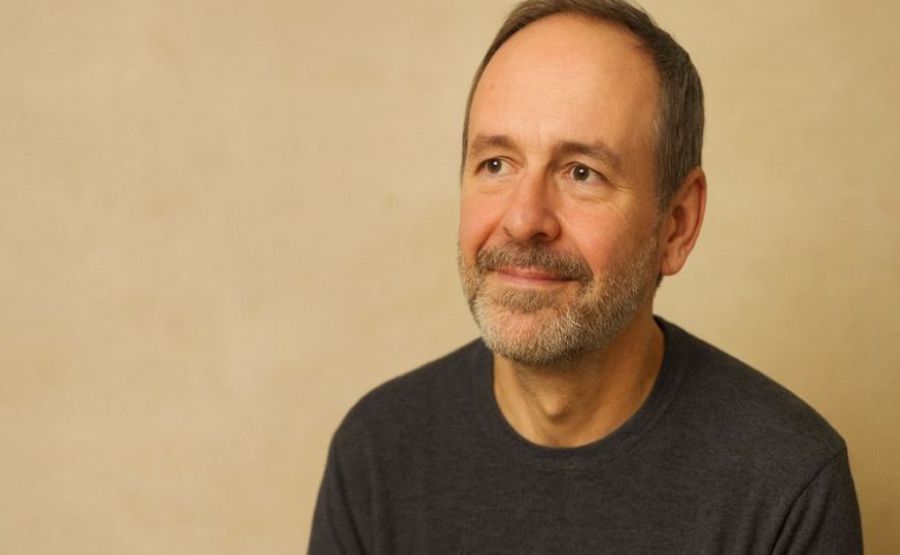
The people who build the visual world of a television production rarely get named. Kev Corbishley was one of them — and two of Britain’s most beloved BBC shows made sure audiences finally knew his name.
When the first episode of Ghosts Series 4 aired on BBC One on Friday 23 September 2022, viewers expecting a comedy about supernatural housemates got something quieter at the end. A single card appeared before the credits: “In loving memory of our friend Kevin Corbishley.” Within hours, that name was being typed into search engines by thousands of people who had never heard it before.
For those who worked alongside him, it needed no explanation at all.
Quick Bio
| Detail | Information |
| Full Name | Kevin Corbishley (known as Kev Corbishley) |
| Born | 1965 |
| Died | 2021 (per IMDb) / early 2022 (per some sources; tribute cards aired February and September 2022) |
| Nationality | British |
| Industry | Film and Television (UK) |
| Roles | Standby Rigger; Light Rigger; Art Department (Plasterer’s Labourer) |
| Key Productions | Anna Karenina (2012 film); Call the Midwife (BBC, 2020–2022); Ghosts (BBC, 2021–2022) |
| Call the Midwife credits | Standby rigger, 15 episodes (Series 9–11) |
| Ghosts credits | Rigger, 4 episodes (Series 2–3) |
| On-screen tributes | Call the Midwife S11 Ep8 (Feb 2022); Ghosts S4 Ep1 (Sep 2022) |
| Cause of death | Not publicly disclosed |
The Man Behind the Lights
Kev Corbishley was born in 1965. Almost nothing about his early life has entered the public record — no school history, no hometown detail, no documented path into the industry. That absence is not unusual for crew professionals who spend their working lives deliberately off camera.
What his credits do show is a career built on practical expertise and genuine versatility. He entered the film industry through the art department, starting with physical construction work on some of the most visually demanding productions of the era. He eventually moved into lighting and rigging — a transition that demanded both technical precision and a thorough understanding of how sets are physically assembled.
He was known on set not only for technical competence but for consistent reliability. The tributes that followed his death — from two separate productions, on two separate occasions, months apart — point to a man whose colleagues genuinely missed his presence, not just his skills.
Starting Out: Anna Karenina and the Art Department
The earliest confirmed production credit on Kev Corbishley’s IMDb filmography is Joe Wright’s 2012 film adaptation of Anna Karenina, starring Keira Knightley and Jude Law. His role there was plasterer’s labourer in the art department.
That work is more demanding than the job title suggests. Anna Karenina is famous for its theatrical staging — an entire film shot largely within the set of a crumbling theatre, where walls, floors, ceilings, and architectural surfaces served as both environment and metaphor. Building and finishing those surfaces required precision craftsmanship.
Corbishley’s contribution to that production placed him in the centre of one of British cinema’s most visually daring projects of the decade. For a man still building his career at the time, it was formative work in exactly the right environment.
Moving Into Rigging: What a Standby Rigger Actually Does
Kev Corbishley’s later career centred on rigging — specifically the standby rigger role, which is distinct from a standard rigger in ways the title doesn’t immediately communicate.
A rigger constructs and installs the physical frameworks that support lighting fixtures, cameras, and other equipment on set. A standby rigger does that work and stays present during filming itself, ready to make adjustments in real time when a director or cinematographer changes requirements. The role demands both planning skill and the ability to respond fast under pressure.
On long-form drama productions — where scenes are relit, reconfigured, and reshaped across weeks of filming — the standby rigger is one of the most operationally critical people on set. Directors of photography depend on them. Safety on set depends on them.
That is the job Kev Corbishley did, across some of the most technically demanding productions on British television.
Call the Midwife: Fifteen Episodes of Quiet Excellence
Call the Midwife is one of the BBC’s longest-running and most consistently watched dramas. Set in the impoverished East End of London during the 1950s and 1960s, it builds its entire visual atmosphere around warm, carefully controlled period light. Getting that atmosphere right across every episode of every series requires exact technical work.
Between 2020 and 2022, Corbishley worked as standby rigger across 15 episodes spanning Series 9 through 11. His name appears in those credits sometimes as “Kevin Corbishley” and sometimes simply as “Kev Corbishley” — the informal credit a small detail that speaks to how the production regarded him.
His death came during early 2022, while Series 11 was still airing. The official Call the Midwife Twitter account responded promptly, describing him as “a dearly beloved member of our crew who died very recently.” The show dedicated Series 11, Episode 8 — which aired on 20 February 2022 — to his memory. The tribute card read: “In memory of Kevin Corbishley 1965–2022.”
The show did not add promotional framing or lengthy praise. The spare phrasing of that card, and the account’s immediate public acknowledgement of his death, reflected a production that genuinely felt the loss.
Ghosts: Where the Second Tribute Came From
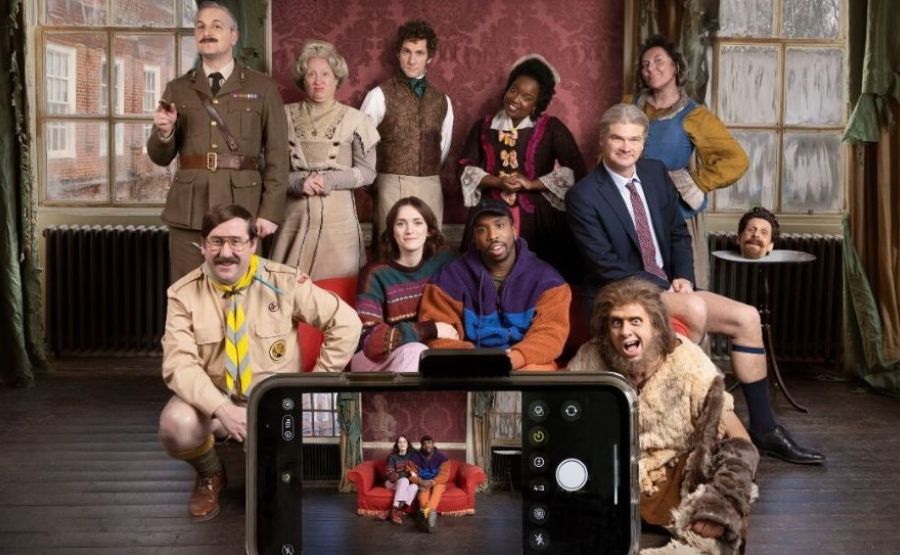
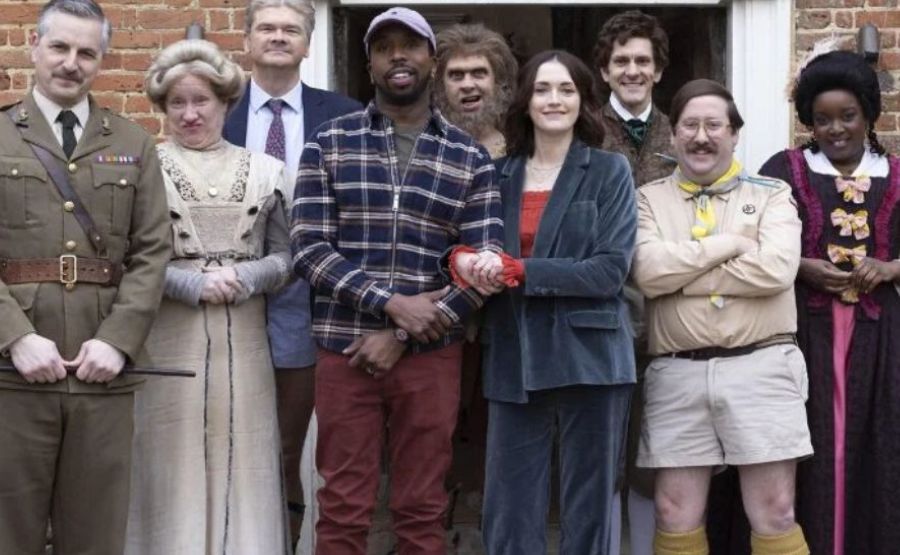
The BBC comedy Ghosts began airing in 2019. It is a show built around the joke that a stately home is haunted by the ghosts of everyone who ever died there — Tudor courtiers, a caveman, a 1980s scout captain — all of whom must cohabit with the house’s new living owners.
The production style is deliberately warm and playful, but it still requires sophisticated lighting work. Comedy lives and dies by visibility — audiences need to see faces, reactions, and physical comedy clearly. The show’s blend of supernatural atmosphere and broad farce demanded careful tonal calibration in every scene.
Kev Corbishley joined Ghosts as a rigger during its second series. IMDb lists him in four specific episodes from 2021: “He Came!,” “Something to Share?,” “I Love Lucy,” and “Part of the Family.” He had been part of the production team across at least two series when filming on Series 4 began.
Then he died.
His colleagues did not announce it and continued filming. According to reports citing Radio Times, the crew was entirely blindsided. After his sudden death at home during the early stages of Series 4 production, his colleagues held a collection among themselves and reportedly asked the owners of the filming location whether they could plant a tree in his memory at the site where they had worked together.
The request to plant a tree is a small detail. It is also the most human detail in the entire story.
The Tributes: Two Shows, Two Different Kinds of Respect
In February 2022, Call the Midwife placed a quiet dedication in the closing credits of Series 11, Episode 8. Seven months later, in September 2022, Ghosts opened its fourth series with a tribute card at the end of the very first episode.
The repetition matters. It is significant to receive one tribute in a single production. Getting two separate tributes from two separate shows — months apart, in very different genres — tells a different story entirely.
These were not courtesy credits. These were deliberate public acts by production teams who wanted audiences to know that someone they relied on was gone. Both productions had large ensembles, large crews, and no obligation to use valuable screen time this way. They chose to.
The Ghosts tribute in particular reached the widest audience, airing on BBC One in prime time on a Friday evening. Within hours, the name Kev Corbishley was trending among viewers curious about who had merited such an acknowledgement from a show they loved.
The Role of Crew Members Like Kev
Television routinely generates news about its actors, writers, and showrunners. The technical crews who make the work physically possible operate in a different economy of recognition.
A standby rigger on a long-running BBC drama might spend 12-hour days on cold location shoots, adjusting lighting configurations between every setup, troubleshooting equipment in real time, ensuring that no one on set is working underneath anything unsafe. Their name appears in credits that most viewers fast-forward through. They do not give interviews. They do not have agents.
What they have is a reputation — built show by show, series by series, in the judgement of directors of photography and production managers who know exactly how good they are.
Kev Corbishley’s reputation, built across roughly a decade of credited British film and television work, was excellent enough that two productions treated his loss as a public event worth marking.
What We Don’t Know — and Why That Matters
The honest account of Kev Corbishley’s life carries a significant gap: almost nothing about his personal life, family, or background before his film career has entered the public record.
His cause of death has never been publicly disclosed. Multiple sources confirm he died at home, and that the death came without warning to his colleagues. Beyond that, nothing.
His dates are slightly contested across sources. IMDb states 1965–2021. The Call the Midwife tribute card reads 1965–2022. The discrepancy likely reflects either a very late 2021 death reported publicly in early 2022, or a genuine uncertainty about exact dates in secondary coverage. IMDb, the main record, states 2021.
What matters is that both the tributes and the timeline are confirmed. The rest is details that only his family owns.
A Legacy Built in Light
Kev Corbishley did not write scripts, direct episodes, or play characters millions of viewers would remember. His contribution was something more elemental: he made sure the light fell correctly on every scene.
He was part of the team that gave Anna Karenina its theatrical grandeur in 2012. He helped create the nostalgic amber warmth that makes Call the Midwife feel like memory rendered on screen. He supported the exact tonal balance that allows Ghosts to be simultaneously eerie and genuinely funny.
None of that carries his visible signature. All of it carries his unseen work.
The two BBC tributes did not create his legacy. They revealed it — briefly and publicly — to audiences who had been watching the results of his effort for years without knowing his name.
Final Words
Kev Corbishley died in 2021, at 56 years old. He had spent his adult working life in the physical, skilled, often cold and always demanding world of British television production. He appears to have done it with consistency, warmth, and enough personal quality that his colleagues — people who have seen many crew members come and go — felt his absence as a genuine loss.
The tree they reportedly asked to plant at the filming location of Ghosts speaks more clearly than any tribute card. A tribute card is two seconds on a screen. A tree grows for decades.
That is the measure of how Kev Corbishley was known to the people who knew him best.
FAQs
1. Who was Kev Corbishley?
Kev Corbishley was a British film and television crew member who worked primarily as a standby rigger and light rigger. He worked on productions including the 2012 film Anna Karenina and the BBC series Call the Midwife and Ghosts.
2. Why did Ghosts pay tribute to Kevin Corbishley?
Corbishley had worked as a rigger on Ghosts from Series 2 onwards. He died during the early stages of filming for Series 4. His colleagues placed a tribute card reading “In loving memory of our friend Kevin Corbishley” at the end of the first episode of Series 4, which aired on 23 September 2022.
3. Why did Call the Midwife also pay tribute to him?
Corbishley served as standby rigger on Call the Midwife across 15 episodes between 2020 and 2022. Following his passing, the show honored him in Series 11, Episode 8, which aired on February 20, 2022. The show’s official Twitter account described him as “a dearly beloved member of our crew who died very recently.”
4. When did Kevin Corbishley die?
IMDb lists his death year as 2021. The Call the Midwife tribute card, which aired in February 2022, reads “1965–2022.” The slight discrepancy across sources likely reflects a late 2021 death that was publicly announced in early 2022.
5. What was the cause of Kevin Corbishley’s death?
The cause of death has not been publicly disclosed. Multiple sources, including Entertainment Daily and Radio Times, confirm only that he died at home. His family’s privacy on this matter has been respected by the productions that honoured him.
6. What exactly does a standby rigger do?
A standby rigger constructs and installs lighting frameworks and equipment support structures, and remains present on set during filming to make real-time adjustments when directors or cinematographers change requirements. It is a role demanding both technical precision and fast adaptability.
7. What was Kevin Corbishley’s role on Anna Karenina?
He worked in the art department as a plasterer’s labourer on Joe Wright’s 2012 film, starring Keira Knightley and Jude Law. The film is renowned for its theatrical staging and intricate set design, which required skilled physical construction work.
8. How many episodes of Call the Midwife did he work on?
According to IMDb, Corbishley worked as standby rigger across 15 confirmed episodes of Call the Midwife between 2020 and 2022, covering Series 9 through 11.
9. How many episodes of Ghosts did he work on?
IMDb lists four episodes from 2021: “He Came!,” “Something to Share?,” “I Love Lucy,” and “Part of the Family.” He joined the production from Series 2 onwards.
10. Did Kevin Corbishley ever appear on screen?
No. He worked entirely behind the camera in technical crew roles. Some viewers who saw the Ghosts tribute assumed he was a character — he was not. He had no scripted role in any production.
11. What happened on the Ghosts set after his death?
According to reports citing Radio Times, his colleagues were shocked by his sudden passing. They held a collection among themselves and reportedly asked the owners of the filming location whether they could plant a tree there in his memory.
12. Why don’t more people know who Kev Corbishley was during his lifetime?
Like most technical crew professionals in British television, Corbishley worked in roles that rarely generated public attention. His name appeared in closing credits that most audiences do not read. The two on-screen tributes in 2022 brought his name to public awareness for the first time — a recognition he could not receive himself, but one that his colleagues clearly felt he had earned.
Explore more, learn more, and think deeper with Theory Magazine.