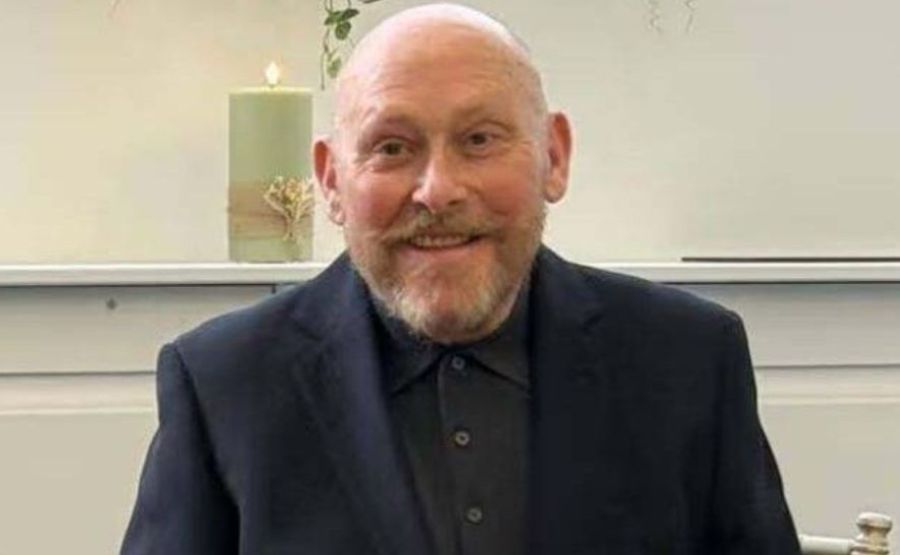
In February 2026, Peter Spanton became a household name almost overnight — not because of anything he had done, but because of what Janet Street-Porter announced on live television. His wife of 27 years of companionship had finally made it official, and suddenly Britain wanted to know who this quietly industrious man actually was.
The answer is more interesting than most expected.
Quick Bio
| Detail | Information |
| Full Name | Peter Charles Spanton |
| Date of Birth | January 1955 |
| Age (2026) | 71 |
| Nationality | British |
| Place of Origin | London, England |
| Occupation | Entrepreneur, Drinks Brand Founder, Former Restaurateur |
| Known For | Vic Naylor’s bar; Peter Spanton Drinks; marriage to Janet Street-Porter |
| Partner/Spouse | Janet Street-Porter (together since 1999; married 31 January 2026) |
| Key Business | Peter Spanton Drinks Ltd (founded 2014) |
| Notable Recognition | Gold, Silver, and Bronze — SIP Awards, Great Taste Awards, Class Bar Awards (2017–2018) |
| Listed Occupation (Companies House) | “Drink Designer” |
Who Peter Spanton Actually Is
Peter Spanton is not famous in the conventional sense. He never chased cameras or gave lengthy interviews. He built things — a restaurant, a drinks brand, a long and quietly devoted partnership — and let the work speak for itself.
Born in January 1955 in London, he came of age in a city still finding its post-war confidence. His early years are deliberately guarded. What we know comes almost entirely from business records and the occasional press reference, not from any autobiography or media campaign.
What those records confirm is a man who chose substance over spectacle. Every chapter of his life points to the same instinct: find something worth making, then make it well.
See also “Kev Corbishley: The Light Rigger Who Made Two BBC Shows Stop to Say Goodbye“
The London Club Years: Where He Learned His Craft
Before Vic Naylor’s, before the drinks brand, Peter Spanton was cutting his teeth behind bars in London’s most electrifying venues. During the early 1980s, he worked as a cocktail mixer at two clubs that defined a generation: Blitz in Covent Garden and the Fridge in Brixton.
These were not ordinary nightclubs. Blitz, in particular, was the heartbeat of the New Romantic movement — where a young George Michael, Boy George, and Spandau Ballet regulars mingled with fashion students and artists. Working the bar there meant developing an instinct for flavour, pace, and the particular needs of people who expected more than the ordinary.
That training was real and lasting. Spanton absorbed what worked, what surprised people, and what made a drink memorable. Those lessons would eventually shape an entire product line decades later.
Vic Naylor’s: Building a Clerkenwell Institution
In 1986, Spanton opened Vic Naylor’s at 38–42 St John Street in Clerkenwell, positioned directly opposite Smithfield meat market. He would run it for nearly two decades.
The choice of Clerkenwell was not accidental. The area was industrial, slightly rough-edged, and largely ignored by the glossier parts of London’s hospitality scene. Spanton saw potential where others saw neglect. Vic Naylor’s would later be described by Barbican Life as “supposedly the start of the Clerkenwell bar/restaurant scene.”
The clientele was eclectic by any measure. Artists, journalists, musicians, designers, and — by some accounts — a smattering of people whose business activities did not bear close examination all passed through the same door. That mix gave the place its charge. It was equal parts salon and saloon.
The venue entered popular culture permanently when Guy Ritchie used it as the filming location for JD’s bar in Lock, Stock and Two Smoking Barrels in 1998 — the establishment run by Sting’s character. The bar appeared on screen exactly as it looked in real life. For many viewers who visited Clerkenwell afterwards, finding the real Vic Naylor’s felt like a discovery.
Publicly, the bar was a creative triumph. In private, Spanton was by his own admission deep in its lifestyle. He later described those years candidly: he would wake around ten, begin drinking, stop at a bar on the King’s Road before noon, and then “start drinking properly” once he reached the restaurant. He lived on a Thames houseboat in Chelsea during this period — a bohemian existence that suited both the man and the decade.
He stepped back from running Vic Naylor’s around 2005. The venue itself sold around 2010. The Clerkenwell scene he helped pioneer had by then transformed into one of London’s most desirable neighbourhoods.
Quitting the Bottle — and Inventing a Brand
The origin story of Peter Spanton Drinks is genuinely unusual. It did not begin with a market gap analysis or a business plan. It began with sobriety.
After selling Vic Naylor’s, Spanton left alcohol behind entirely. He later told interviewers that as a serious former drinker, he found the non-alcoholic options available to adults at the time completely inadequate. Sparkling water felt punishing. Juice felt juvenile. There was nothing that actually satisfied someone who understood what good flavour meant.
So he started making his own.
Beginning in 2010, he developed recipes from his EC1 base in Clerkenwell and began bottling on a small scale. The company was formally incorporated as Peter Spanton Limited in May 2008, followed by Peter Spanton Drinks Ltd in July 2014. His official occupation on Companies House filings was listed simply as “Drink Designer” — a title that perfectly encapsulates his approach.
The brand’s philosophy was consistent and personal: create beverages sophisticated enough for adults with discerning palates, pair them brilliantly with quality spirits, and make them worthwhile on their own too.
The Drinks: What He Built
The product line that emerged from Spanton’s experiments was unlike anything else in the UK market at the time. Each number carried a distinct identity and backstory.
No.3 Dry Ginger is perhaps the most personal. Its label reads: “In memory of Notcher Spanton 1928–2012” — his father. Spanton described the inspiration as the smell of his father’s whisky and dry ginger in 1950s East London, when men wore suits to the pub and drinks carried genuine weight. The blend uses real ginger heat and a top note of lime.
No.4 Chocolate Tonic pairs dark mint and chocolate bitters, designed specifically for rum and amaretto. The brand itself warned drinkers: “you will either love or loathe this because there is simply no middle ground.”
No.5 Lemongrass Tonic combines lemongrass with ginger, best paired with vodka.
No.9 Cardamom Tonic became the flagship and competition winner. It pairs particularly well with gin, and earned the brand its most significant industry recognition.
No.13 Salted Paloma brought grapefruit soda to the line, aimed at tequila and mezcal drinkers.
All of these were carbonated with volcanic CO₂ sourced from the ground — making them the first UK beverages to use this method, which is carbon-neutral.
The brand attracted serious endorsement early. Chef Mark Hix stocked the drinks across his restaurants. Fergus Henderson served them at St John, his Michelin-recognised Clerkenwell restaurant. The brand won Gold, Silver, and Bronze at the SIP Awards, Great Taste Awards, and Class Bar Awards in both 2017 and 2018.
The Business Reality: Complexity Behind the Recognition
The commercial story is more complicated than the award shelf suggests.
Both companies carrying Spanton’s name eventually closed. Peter Spanton Limited dissolved in May 2018. Peter Spanton Drinks Ltd entered creditors’ voluntary liquidation in June 2020 and was formally dissolved in July 2022. For any entrepreneur, these are sobering facts alongside the accolades.
What remains less clear is how or whether the brand continues to trade under different arrangements. Multiple sources as of 2026 note that the Peter Spanton name and product identity still appear in the market, though the formal corporate structure that sustained it no longer exists.
This complexity matters. Spanton’s trajectory is not the simple arc from idea to triumph that profile pieces often prefer. He navigated real commercial difficulty alongside genuine creative achievement. Both things are true.
Janet Street-Porter: A 27-Year Partnership
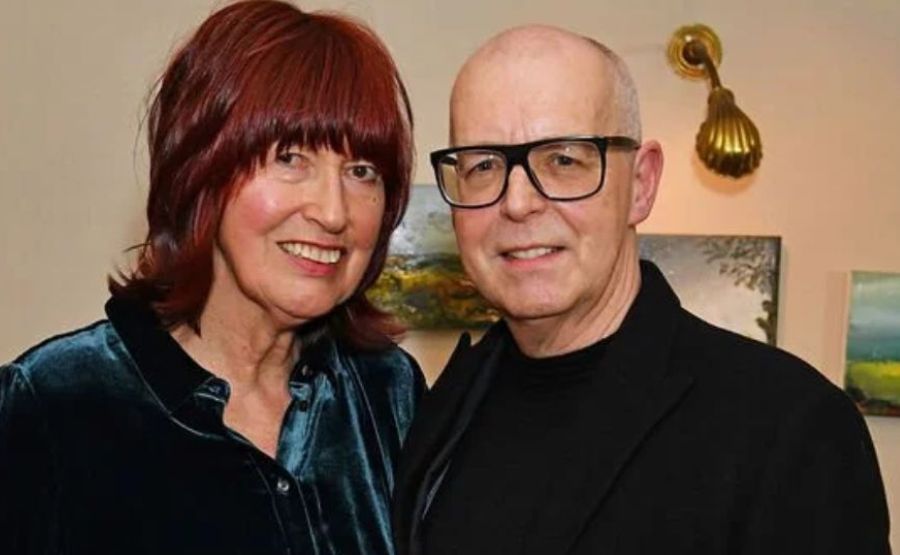
Peter Spanton and Janet Street-Porter began their relationship in 1999. He was 44. She was 52. Neither seemed particularly interested in making the relationship a public event.
Street-Porter, by then one of Britain’s most recognisable media figures — broadcaster, journalist, Loose Women panellist, former BBC youth programming commissioner — had already been married four times. To Tim Street-Porter (1967–1975), to Tony Elliott (1975–1977), to documentary maker Frank Cvitanovich (1979–1981), and to David Sorkin in Las Vegas in 1997, a union she later called “a really bad mistake” that lasted just two years.
Spanton was different. Speaking to The Guardian in 2025, Street-Porter described the relationship with characteristic bluntness: “What do you define good as? It survived. I’m not bored.”
That line, unsentimental and honest, captures something true about them as a couple.
They kept their private life genuinely private across nearly three decades. No red carpet appearances, no joint interviews, no social media display of domestic bliss. Street-Porter occasionally mentioned him on Loose Women — describing him as grounded, practical, and entirely uninterested in the spotlight. Those characterisations match everything else known about the man.
The Secret Wedding in Norfolk
On Saturday, 31 January 2026, Peter Spanton and Janet Street-Porter got married. Nobody outside their immediate circle knew it was happening.
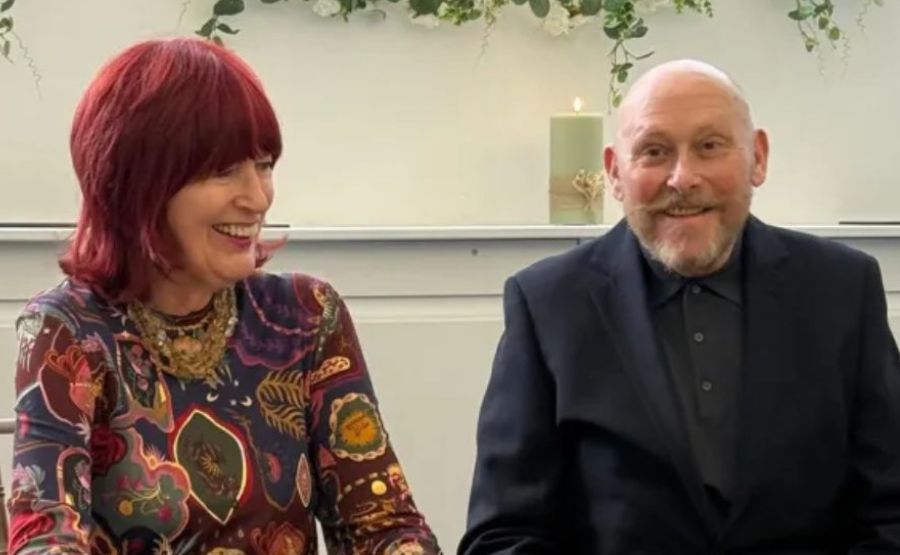
The ceremony took place at a registry office in Great Yarmouth, Norfolk. It lasted approximately ten minutes. Six people attended: the couple, two former neighbours serving as witnesses, and two close friends. Their dog, Badger, was also present. Street-Porter wore a bright printed dress. Spanton wore a black suit. The chairs for a hundred guests sat empty.
Two days later, on Monday 2 February 2026, Street-Porter revealed the news via a pre-recorded video message aired on Loose Women. Standing beside Spanton and their dog, she addressed the nation: “It’s my big news for everybody watching. On Saturday, Badger, Peter, and I tied the knot. You see, I did it at last. Waited ’til the last for the best.”
The Loose Women panel reacted with visible emotion. Co-host Brenda Edwards, moved to tears, told her colleagues to stop counting numbers. “She’s got happiness,” Edwards said. “That’s what matters.”
Street-Porter later told the full panel that the decision had come after the couple talked it through over Christmas 2025. She admitted she had been “in a complete state” the night before — partly from nerves, partly because the memory of the Las Vegas marriage to David Sorkin weighed on her. This time, she said, felt completely different.
For a woman who had faced cameras her entire adult life, the choice to marry privately — no press, no announcement, no performance — was itself a statement. And Spanton, characteristically, was the man standing beside her who made it possible.
The Public Profile: Deliberate Quiet
There is no Wikipedia page for Peter Spanton the entrepreneur. There is no substantial interview archive, no memoir, no documentary.
What exists is a body of work: a restaurant that changed a neighbourhood, a drinks brand that challenged an entire category, and a marriage that endured longer than most public relationships survive. His Instagram presence, where it exists, focuses on the brand rather than the man.
This privacy is not evasion. It is a consistent character trait across everything he has done. He has built his identity through objects — through bars and bottles — rather than through self-promotion.
That, in its own way, is a statement worth noting.
Legacy and Meaning
Peter Spanton does not fit the dominant narrative of British entrepreneurship — the TED Talk, the accelerator pitch, the viral launch. He built things slowly, through experience, over decades.
He understood hospitality from the inside out, having worked nightclub bars before he owned a restaurant. He understood adult beverages from the inside out, having been a serious drinker before he went sober and created an alternative. Every product he made drew from real personal knowledge, not trend reports.
The Clerkenwell that Vic Naylor helped create is now one of London’s most sought-after postcodes. The adult soft drink category he entered early — once genuinely niche — has since exploded into a mainstream market worth hundreds of millions. His timing, in both cases, was early and instinctive.
The commercial turbulence around his drinks company is real and should not be minimised. But the contribution to the category, the quality of the product recognised by industry awards, and the longevity of his partnership with one of Britain’s sharpest media voices — all of these point to a man whose influence outlasted his formal corporate structures.
He is, in 2026, a 71-year-old Londoner who made things he believed in, loved a woman fiercely and privately for 27 years, and finally walked into a ten-minute ceremony in Norfolk with six people and a dog.
That is, by most honest measures, a life well lived.
Final Words
Peter Spanton is not the kind of person who writes his own story. He has spent his career making other things: bars where people felt alive, drinks that respected the adult palate, and a relationship that withstood the particular pressures of loving someone permanently in the public eye.
His story is compelling precisely because it resists the usual template. No overnight success. No clean arc. No carefully managed personal brand. Instead, there is real craft, real difficulty, real joy, and real continuity.
The 2026 wedding in Great Yarmouth was not the beginning of something. It was the natural conclusion of something that had already been quietly extraordinary for a very long time.
FAQs
1. Who is Peter Spanton?
Peter Spanton is a British entrepreneur born in January 1955. He is best known for running Vic Naylor’s restaurant and bar in Clerkenwell, London from 1986 to around 2005, and for founding Peter Spanton Drinks, a premium adult beverages brand. He is also the husband of broadcaster and journalist Janet Street-Porter.
2. How old is Peter Spanton?
He turned 71 in January 2026, based on UK Companies House records confirming his birth month as January 1955.
3. When did Peter Spanton marry Janet Street-Porter?
They married on Saturday, 31 January 2026, at a registry office in Great Yarmouth, Norfolk. The ceremony lasted roughly ten minutes with only six guests present.
4. How long were Peter Spanton and Janet Street-Porter together before marriage?
They had been in a relationship since 1999 — approximately 27 years before they married.
5. What is Peter Spanton Drinks?
It is a premium botanical beverages brand founded by Spanton, offering a numbered range of tonics, mixers, and adult soft drinks including the flagship No.9 Cardamom Tonic, No.3 Dry Ginger, No.4 Chocolate Tonic, and No.13 Salted Paloma. The drinks were the first in the UK carbonated with volcanic CO₂.
6. Has Peter Spanton Drinks won any awards?
Yes. The brand won Gold, Silver, and Bronze at the SIP Awards, the Great Taste Awards, and the Class Bar Awards in both 2017 and 2018.
7. What was Vic Naylor’s?
Vic Naylor’s was a bar and restaurant at 38–42 St John Street in Clerkenwell, London, which Spanton opened in 1986 and ran until around 2005. It was widely credited with helping launch the Clerkenwell hospitality scene. It also appeared in Guy Ritchie’s 1998 film Lock, Stock and Two Smoking Barrels as JD’s bar.
8. Is Peter Spanton the same person as the karate instructor?
No. There is a separate Peter Spanton, born in 1943 in Bow, East London, who is a pioneering British Wado-ryu karate instructor. Multiple online sources have incorrectly merged their biographies. They are entirely different individuals.
9. Why did Peter Spanton quit alcohol and create his drinks brand?
After years of heavy drinking during his time running Vic Naylor’s, Spanton gave up alcohol entirely. Finding the non-alcoholic alternatives available to adults at the time inadequate, he began developing his own recipes — eventually launching the brand commercially around 2010.
10. What happened to Peter Spanton’s companies?
Peter Spanton Limited (incorporated 2008) dissolved in May 2018. Peter Spanton Drinks Ltd (incorporated 2014) entered creditors’ voluntary liquidation in June 2020 and was dissolved in July 2022. Despite this, the brand name and products appear to have continued in some form.
11. Did Peter Spanton have children?
No children from his relationship with Janet Street-Porter have been publicly confirmed.
12. Where did Peter Spanton work before Vic Naylor’s?
He worked as a cocktail mixer at two iconic 1980s London clubs — Blitz in Covent Garden and the Fridge in Brixton — both central to the New Romantic and underground music scenes of the era.
13. What is the significance of the No.3 Dry Ginger product?
It carries a personal dedication: “In memory of Notcher Spanton 1928–2012” — Peter’s father. The flavour was inspired by memories of his father’s whisky and ginger in 1950s East London.
14. What is Peter Spanton’s listed profession?
According to UK Companies House records, his occupation is listed as “Drink Designer.”
15. How did Peter Spanton’s wedding become public?
Janet Street-Porter revealed the news via a pre-recorded video message broadcast on ITV’s Loose Women on 3 February 2026, two days after the ceremony. She appeared in the video alongside Spanton and their dog, Badger.
Explore more, learn more, and think deeper with Theory Magazine.