The Ground Gave Way: The Full Story of the Riverbank Collapse Iford Playing Fields
Quick Facts at a Glance
| Detail | Information |
| Location | Iford Playing Fields, Iford suburb, Bournemouth/Christchurch, Dorset |
| River Involved | River Stour |
| Collapse First Noticed | Around May 27–29, 2025 (first photographed May 29, 2025) |
| Section Affected | Approx. 50+ metres of riverbank along the playing fields |
| Nearest Landmark | Near the train bridge opposite Bailey Bridge Marina |
| Council Responsible | Bournemouth, Christchurch and Poole Council (BCP Council) |
| Injuries Reported | None |
| Soil Type | Predominantly clay — absorbs and holds water, weakens when saturated |
| River Type | Combined freshwater flow and tidal influence from Christchurch Harbour |
| Recovery Stage | Ongoing monitoring, short-term barriers in place, long-term plan in development |
A Morning Walk That Changed Everything
Picture this.
It is a quiet morning in late May 2025. A local woman named Nicky Adams steps outside with her dogs, as she does most mornings. She walks toward the River Stour at Iford Playing Fields.
She has taken this same route dozens of times before. She knows every tree, every bend, every patch of grass along the riverbank.
But something is different this morning.
Where the green bank used to slope gently down to the water, there is now a sharp, ragged drop. Big trees — the kind that take decades to grow — are lying sideways in the river. Their roots are up in the air. Their trunks are half-submerged.
The ground just disappeared.
Nicky took photographs. She shared them. And the story began spreading through the community almost immediately. What she found that morning gave people their first real look at something that had happened quietly, overnight, while everyone slept.
What Iford Playing Fields Actually Is
Before getting into what happened, it helps to understand what was lost — or at least, what was put at risk.
Iford Playing Fields is not just a patch of grass. It is one of the most well-loved community spaces in the Bournemouth and Christchurch area of Dorset.
It runs alongside the River Stour in the suburb of Iford. The river gives the place its character. On a warm day, the water glitters beside the footpath. Swans drift past. Families spread out on the grass.
People have been coming here for generations. Footballers use the pitches on weekday evenings. Rugby teams train here on muddy Saturday mornings. Dog walkers circle the fields every single day, no matter the weather.
In summer, the river becomes part of the attraction too. Paddleboarders launch from the bank. Kayakers drift downstream. Wild swimmers dip in on hot days.
It is the kind of place that makes daily life feel good. Unhurried. Connected to nature.
Which is why what happened here hurt so much to see.
The Collapse: What It Looked Like Up Close
The photographs Nicky Adams took tell the story clearly.
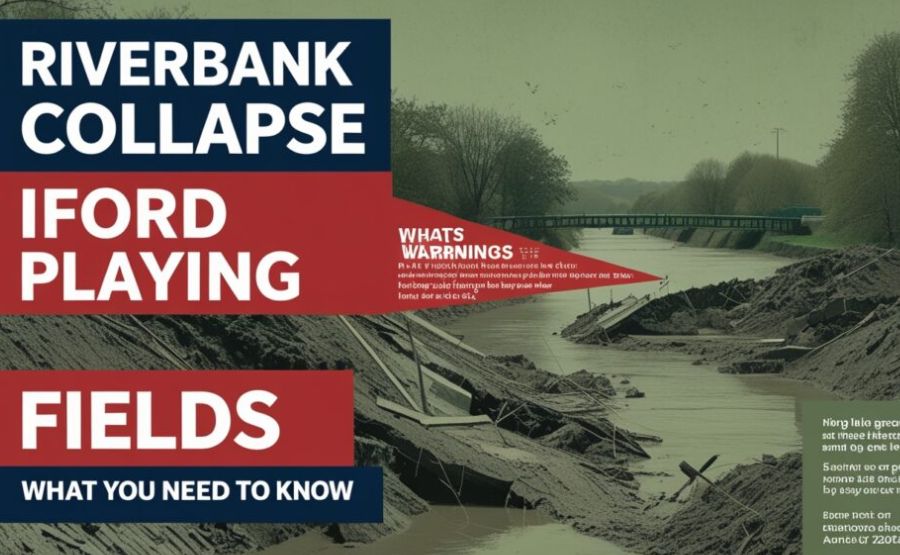
A long section of the riverbank — more than fifty metres by most estimates — had simply caved in. The earth did not erode slowly over weeks. It went down fast. Probably overnight.
The bank that had once been a smooth, grassy slope was now a jagged, steep cliff edge. Raw soil showed where the grass had been ripped away. You could see layers of earth exposed, like a wound.
Tall mature trees, some of which must have been growing there for thirty or forty years, had toppled forward. Their entire root systems had pulled out of the ground as the soil beneath them gave way. Several trunks now lay across the water, creating a kind of chaotic wooden bridge that nobody would ever use.
The riverside footpath — popular with cyclists and walkers — was partially broken away in sections closest to the edge. What was solid ground two days earlier was now an unstable, crumbling drop.
The river itself looked different too. The water near the collapse zone was murky and thick with sediment from all the soil that had tumbled in.
For locals who know this place well, the scene was genuinely shocking.
Why Did This Happen? The Real Causes
Here is the honest answer: this did not happen because of one bad storm.
It happened because of a long list of pressures that had been building up over months and years. The dramatic collapse in late May 2025 was the final result of things going wrong slowly, then all at once.
Heavy rainfall and saturated ground — Dorset had a period of prolonged, heavy rain in mid-to-late May 2025. Day after day of wet weather meant the soil at the riverside absorbed water until it could hold no more. Saturated clay soil does not hold together. It gets heavy, loses grip, and starts sliding.
The clay soil itself — The ground along this stretch of the River Stour is mainly clay. Clay is tricky. It shrinks and cracks in dry weather. In wet weather it swells and becomes slippery. Over years of this expanding and contracting, the bank weakens from the inside out. It is not a fast process. But it is a relentless one.
River undercutting — The base of the bank is regularly traversed by the River Stour. Moving water gradually eats away at the bottom of the bank, a bit like a wave wearing down a sandcastle. Over time, the bottom gets eroded while the top stays in place — until the top has nothing left to rest on, and it drops.
Tidal influence — This is something that makes the Iford stretch particularly vulnerable. The River Stour here is not purely a freshwater river. It is connected downstream to Christchurch Harbour, which means tides affect the water level. The pull and push of tidal water adds extra stress on the banks that a purely inland river would not face.
Loss of vegetation roots — Tree and plant roots hold riverbanks together. They weave through the soil like nature’s netting. Over time, some vegetation had deteriorated along this stretch. Where roots weaken or die back, the soil becomes much easier to shift.
Strong winds on the night of the collapse — Several sources point to strong winds in the days immediately before the collapse. Wind adds physical stress on trees. When a big tree is being pushed by wind, it rocks. That rocking loosens the soil around the roots. For a bank already weakened by weeks of rain, the added pressure from wind was likely the final trigger.
All of these things were stacked on top of each other. The result was fifty metres of riverbank going into the River Stour in a single night.
What the Council Did Next
Nobody was hurt. That matters enormously.
But the risk of someone getting hurt was real. The new bank edge was unstable and steep. Children and dog walkers could easily have walked toward the edge without realising how dangerous it had become.
BCP Council — the Bournemouth, Christchurch and Poole Council — acted quickly.
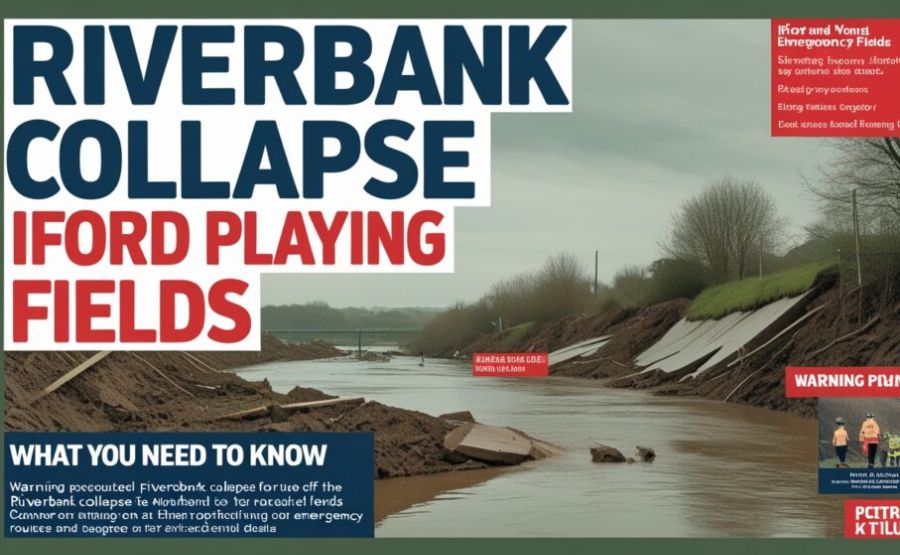
Within days of the collapse being reported, safety barriers and warning tape were installed along the most dangerous sections. Signs went up telling people to keep back. The sections of path closest to the collapse zone were restricted.
Specialist engineers were called in. Geotechnical experts — people who study the behaviour of soil and ground — came to assess how bad the damage was and whether further collapses were likely. Hydrologists, who study how water moves through landscapes, also took part in the assessment.
The Environment Agency was brought in to oversee the wider picture. They monitor rivers and flood risk across England, and this kind of event falls directly within their remit.
The BCP Council acknowledged publicly that riverbank erosion is a natural process in this area. But they also acknowledged this particular collapse was unusually large.
What Happened to the River
The bank’s appearance was not the only thing altered by the collapse. It changed the river too.
All that soil going into the water raised the sediment levels in the River Stour near the affected stretch. Sediment clouds the water. It settles on the riverbed. In large amounts, it can smother the small animals and plants that live on the bottom.
Fish, insects, and other river creatures depend on clear, oxygen-rich water. A sudden sediment dump affects their habitat. It is not necessarily permanent, but it takes time for the river to recover.
The fallen trees created another problem. Their trunks and root balls now sit partly below the water’s surface, invisible from above. Anyone paddleboarding or swimming through that stretch without knowing about the collapse could hit sharp branches or become caught in submerged roots.
This made water activities — previously one of the joys of the River Stour at Iford — genuinely dangerous in the immediate aftermath.
The Human Cost: How the Community Felt
Iford Playing Fields is not just land to the people who use it. It is part of their routine, their wellbeing, and their sense of home.
Parents who had brought their kids to play football here for years suddenly found the familiar path was blocked off with tape. Joggers who ran the riverside route every morning had to change their circuit.
Dog walkers — who perhaps use this space more than anyone — had to keep their animals away from the water’s edge that they had freely explored before.
For some residents, the emotional reaction was more than just inconvenience. It was grief. The riverside looked broken. A place that had been calm and green and constant had been transformed overnight into something rough and dangerous.
One community member later described it as feeling like a familiar neighbour had suddenly changed beyond recognition.
That kind of attachment to a local green space is easy to underestimate until it is threatened.
How Long Will Recovery Take?
Honestly, recovery at a site like this is not quick.
The short-term work — fencing, barriers, emergency inspections — can be done in days. That has already happened.
But making the bank safe for the long term is a much bigger task.
Engineers and ecologists have been discussing several approaches. Two broad categories of solution exist: hard engineering and soft engineering.
Hard engineering involves physical structures. Things like gabion walls — wire cages filled with rock — placed at the base of the bank to stop further erosion. Or rip-rap, which means large stones placed at the water’s edge to absorb the force of the current. These are effective but expensive and must be carefully designed so they do not damage the river’s ecology.
Soft engineering (also called bioengineering) is a gentler approach. It involves planting deep-rooted native trees and plants along the bank to hold the soil together. It might also include erosion-control matting made from natural fibres, laid over bare soil while new vegetation establishes itself.
The River Stour is a protected ecological habitat. That means any work done to the bank must go through environmental screening to ensure it does not harm the fish, wildlife, or plant life in the river. Salmon and trout live in this stretch. Getting any restoration work wrong could damage the ecosystem for years.
That is why restoration takes time. It requires the right people, the right approach, and adequate funding.
The BCP Council is reviewing its options. Long-term vegetation projects, combined with structural reinforcement at the most vulnerable points, appear to be the direction they are heading.
Could This Happen Again?
The short and honest answer is yes — it is possible.
Once a riverbank has collapsed, the edges left behind are often unstable too. Cracks may extend back from the visible drop, weakening ground that looks firm on the surface. Further sections may slide if there is another period of intense rainfall before the bank has been stabilized and replanted.
The risk is higher in wet weather, during flooding, or when strong winds batter the trees that remain along the edge.
BCP Council is monitoring the site actively. They have asked residents to report anything new — fresh cracks in paths, ground that feels soft or spongy near the river edge, trees leaning more than usual, exposed roots.
These are not signs to ignore. If you see any of them at Iford Playing Fields, the advice is clear: do not approach the edge, and contact BCP Council straight away.
What Good Management Looks Like Going Forward
This event has nudged local conversations about how riverside spaces like this should be looked after.
There are steps that can make a real difference:
- Regular bank inspections — not just after storms, but at scheduled intervals all year round
- Early warning systems — sensors in the soil that detect unusual movement or moisture levels before a collapse happens
- Vegetation management — keeping native trees and plants healthy along the bank, replacing dead or dying ones before gaps form
- Limiting foot traffic — some sections of the bank path may need to be rerouted further from the edge to reduce the pressure of daily use
- Public education — helping people understand what warning signs look like so they can report problems early
None of this is complicated. But it does require commitment from the council, the Environment Agency, and the community working together.
The Wider Picture: Rivers and Climate
The Iford collapse is not a one-off curiosity. It is part of a pattern.
Across England, riverbanks are under increasing pressure. Winters bring heavier rainfall than they used to. Summers bring longer dry spells. The cycle of soaking and drying is harder on clay-rich soils than anything that came before.
The Environment Agency has noted that UK rivers are seeing more erosion events, more sediment movement, and more bank instability. Flood events that used to happen once every twenty years are now happening more frequently.
Places like Iford Playing Fields — low-lying, river-adjacent, clay-soil, tidal-influenced — are precisely the kind of sites that face the greatest risk.
Which means what happened at Iford is a glimpse of what many more communities may face if river management and maintenance do not keep pace with changing conditions.
Final Words
Iford Playing Fields is still there. The football pitches still exist. The walking routes still work, mostly. Life in the fields continues.
But the riverside edge looks different now. Something that felt permanent and reliable turned out not to be either of those things.
That is the strange and humbling truth about landscapes near rivers. They are always moving, always changing. Slowly when conditions are stable, fast when they are not.
The community around this place loves it. That love shows in the way people talked about it after the collapse — with worry, with sadness, but also with determination to see it restored.
The council is working on it. The Environment Agency is watching. Ecologists and engineers are thinking carefully about the best way forward.
The river will keep flowing. The ground will, in time, be made stable again. And one day — hopefully sooner rather than later — the people of Iford and Christchurch will have their full riverbank back.
Until then, the message is simple: stay back from the edge, keep your dogs close, and let the experts do their work.
FAQs
1. What precisely took place at Iford Playing Fields?
A large section of the riverbank beside the River Stour collapsed overnight in late May 2025. Roughly fifty metres of earth slid into the water, bringing down mature trees with it. The incident was first photographed on May 29, 2025.
2. Was anyone hurt in the collapse?
No. No injuries were reported. The collapse happened overnight when nobody was near the bank. Authorities moved quickly to fence off the area once the damage was discovered.
3. Where exactly is Iford Playing Fields?
It is in the suburb of Iford in the Bournemouth and Christchurch area of Dorset, southern England. The fields run alongside the River Stour, near the train bridge that sits opposite Bailey Bridge Marina.
4. What caused the bank to collapse?
Several things combined: weeks of heavy rainfall saturating the clay soil, river water gradually undercutting the base of the bank, strong winds in the days before the event, loss of stabilising vegetation roots, and the additional pressure of tidal influence from Christchurch Harbour downstream.
5. Are the rest of the playing fields still open?
Yes. The playing fields themselves remain accessible for sport and recreation. The restricted area is limited to sections closest to the collapsed bank. People are advised to stay at least five metres back from the unstable edges.
6. Who is responsible for fixing it?
Bournemouth, Christchurch and Poole Council (BCP Council) is leading the response, in coordination with the Environment Agency. They are responsible for managing flood risk and public safety at riverside sites like this.
7. Can I still paddleboard or swim on the River Stour near here?
Extreme caution is advised in the affected stretch. The collapsed trees left behind submerged trunks, branches, and root balls hidden below the water surface. Anyone entering the water near the collapsed section risks hitting or becoming tangled in this debris.
8. Is the collapse going to get bigger?
It is possible. Once a section collapses, the remaining edges are often unstable too. Further heavy rain, flooding, or strong winds could trigger additional movement. The BCP Council is actively monitoring the site.
9. What red flags should I watch out for?
Look for new cracks in the path near the river edge, ground that feels soft or spongy, trees leaning toward the river, exposed roots close to the water, or any fresh soil breaks along the bank. Report anything like this to the BCP Council immediately.
10. How long will repairs take?
Short-term safety measures (barriers, fencing, assessments) are already in place. Full, long-term restoration — including bank reinforcement and vegetation replanting — could take several months to years, depending on engineering decisions, funding, and environmental approval processes.
11. What solutions are being considered?
BCP Council is exploring both hard engineering options (gabion walls, rip-rap stone reinforcement) and soft bioengineering approaches (deep-rooted native planting, erosion-control matting). Because the River Stour is a protected ecological habitat, any work must pass environmental screening.
12. Is this part of a wider problem with UK rivers?
Yes. Riverbank erosion is increasing across England as weather patterns become more extreme. Heavier winter rainfall, longer dry summers, and more frequent flooding events are all putting extra stress on clay-rich riverside banks like the one at Iford.
13. What can local residents do to help?
Report any new signs of instability to the BCP Council promptly. Keep dogs on leads near the bank edge. Share safety information with community groups and fellow walkers. Avoid any activities near the unstable section until authorities confirm it is safe. And stay engaged with local council consultation if and when it comes — community input matters in decisions about how sites like this are restored.
Explore more, learn more, and think deeper with Theory Magazine.