You’d think buying a bed would be simple. Then you realize there are at least four different “twin” options, two different sets of sheet sizes, and a minimum room size nobody warned you about — and suddenly the whole thing feels a lot bigger than 38 inches.
Let me sit down with you and sort all of this out. I’ve done the research. You bring the measuring tape.
Quick Reference
| Feature | Measurement |
| Standard Twin — Width | 38 inches / 96.5 cm / 3.17 feet |
| Standard Twin — Length | 75 inches / 190.5 cm / 6.25 feet |
| Total surface area | 2,850 square inches / 19.8 square feet |
| Twin XL — Width | 38 inches (same as standard) |
| Twin XL — Length | 80 inches / 203.2 cm (5 inches longer) |
| Typical mattress thickness | 6 to 14 inches |
| Bed frame size (approx.) | 40–43 inches wide x 77–80 inches long |
| Minimum room size needed | 7 feet x 10 feet |
| Ideal room size (with furniture) | 8 feet x 10 feet |
| Twin flat sheet size | Approx. 66 inches x 96 inches |
| Twin comforter size | Approx. 68 inches x 88 inches |
| Manufacturing tolerance | Plus or minus 1 inch in width and length |
Why People Get Confused About Twin Beds
Here’s the thing. Nobody tells you that “twin” doesn’t actually refer to the bed being twice anything.
The word “twin” comes from the idea of putting two of these beds together in one room — like you’d see in a hotel or a child’s shared bedroom. Two matching beds. Twin beds. The name stuck even though each individual mattress is designed for one person.
That’s the irony. A twin bed is the smallest standard adult mattress you can buy. And people have been confused about the name for decades.
See also “Taper Fade vs Fade: The Honest Guide Every Man Needs Before His Next Haircut“
The Standard Twin Bed — Exact Numbers
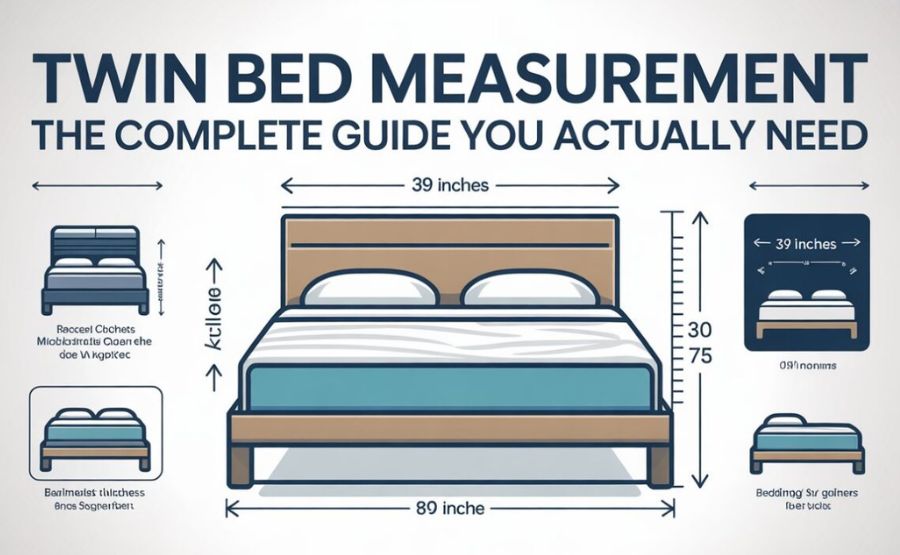
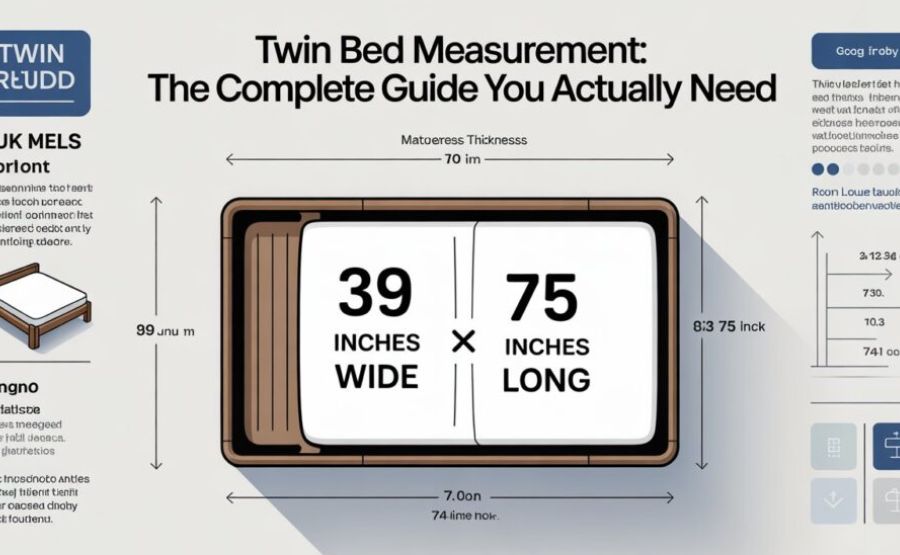
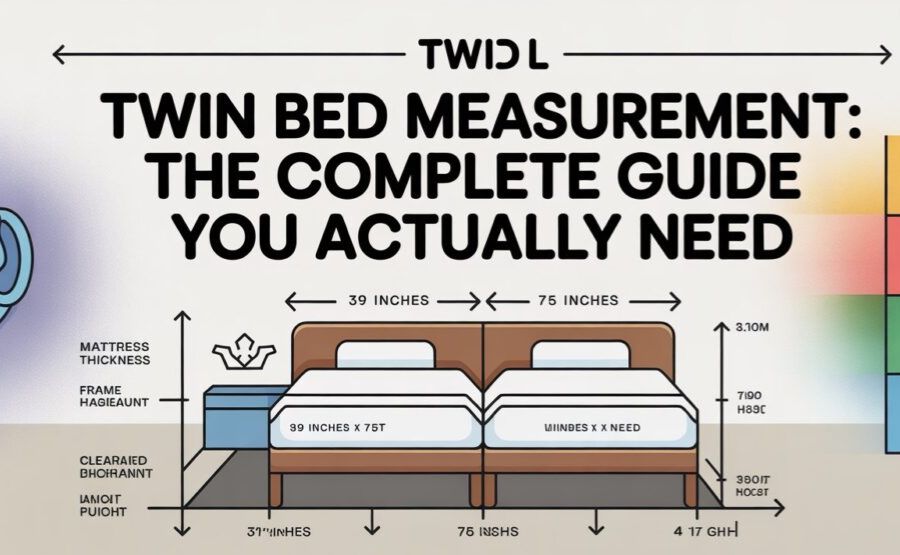
A standard twin mattress is 38 inches wide and 75 inches long.
That’s in inches, which is how most American mattress companies list their sizes. If you prefer metric, that comes out to about 96.5 centimetres wide and 190.5 centimetres long.
In feet, you’re looking at roughly 3.17 feet wide and 6.25 feet long.
Put that together and the total sleeping surface covers about 2,850 square inches — or just under 20 square feet. That’s roughly the size of two standard bathtubs laid side by side.
One important note: manufacturers are allowed a tolerance of plus or minus one inch. So your mattress might actually measure 37 inches wide or 76 inches long and still be completely standard. Always leave that wiggle room when planning your space.
What About the Bed Frame — Isn’t That Different?
Yes, and this trips up a lot of people.
The mattress is 38 inches wide. But the bed frame that holds it is usually a bit larger — typically 40 to 43 inches wide and 77 to 80 inches long.
That extra space accounts for the frame’s rails, the headboard thickness, and the structural parts that wrap around the mattress. If you’re measuring a doorway to get the frame inside, or calculating how much floor space you need, always use the frame dimensions, not just the mattress size.
Also keep in mind that a twin mattress does not fit inside a twin XL frame or bunk bed designed for a twin XL. Even though the width is the same, that extra five inches of length in the XL frame leaves your mattress rattling around inside it. Same goes the other way — a twin XL mattress will overhang the end of a standard twin frame.
Twin vs Twin XL — The Five Inches That Change Everything
A twin and a twin XL are basically twins themselves. They share the same 38-inch width. The only difference is five inches of length.
But that five inches matters more than it sounds.
If you’re under six feet tall, a standard twin at 75 inches gives you enough room to sleep comfortably, with your head near the top and some breathing room at the bottom.
If you’re right at six feet or taller, those 75 inches start feeling very tight, very fast. Especially if you sleep with a pillow that pushes your body down toward the foot of the bed.
A twin XL stretches to 80 inches long — that’s 203 centimetres, or 6 feet 8 inches of sleeping space. Your feet don’t hang off. Your legs aren’t compressed. You actually sleep.
College dormitories almost universally use twin XL beds for exactly this reason. Students range from five feet to six-and-a-half feet, and the longer mattress handles that range comfortably.
One practical heads-up: twin sheets and twin XL sheets are not interchangeable. A fitted sheet made for a standard twin will pull right off the corners of a twin XL. A twin XL sheet will bunch and bunch on a standard twin. They’re different products. Buy the right one for your mattress.
How Much Room Do You Actually Need?
This is where a lot of buyers make mistakes.
They measure the mattress. They see it’s 38 by 75 inches. They think “great, that fits” — and then they bring the bed home and discover there’s no room to walk around it, open a door, or put anything else in the room.
Here’s what you actually need:
A standard twin bed requires a minimum of 7 feet by 10 feet of floor space just to move around the bed comfortably. That’s the bare minimum, as in nothing else in the room.
If you want to add a dresser, a nightstand, a desk, or literally any other furniture — you’ll want at least 8 feet by 10 feet, and ideally a bit more.
A twin XL needs just a little more length — roughly 7 feet by 10.5 feet minimum.
For comparison, a full (double) bed needs at least 10 feet by 10 feet. That’s why twin beds are so popular in smaller bedrooms, shared kids’ rooms, and studio apartment guest setups. They genuinely save meaningful floor space compared to everything else.
Twin Bed Height — The Number Nobody Mentions
Most guides skip this one entirely, but you should know it.
The mattress itself is typically 6 to 14 inches thick, depending on what you buy. A basic budget mattress sits toward the thinner end. A premium mattress with multiple comfort layers sits closer to the thicker end.
But the total height of your bed depends on what you put underneath it.
A platform bed frame sits low to the ground. The mattress top might end up only 18 to 24 inches off the floor. Easy for kids to climb in. Looks sleek and modern.
A box spring setup adds significant height. The box spring itself is usually 9 inches or so, plus the frame height, plus the mattress thickness. You could easily end up with a sleeping surface that’s 24 to 30 inches off the floor.
Why does this matter? Because getting in and out of bed at different heights matters to different people. Kids, older adults, and people with mobility concerns all have preferences here. Measure the total setup, not just the mattress.
Twin vs Full — The Width Difference That’s Bigger Than You Think
Let’s say you’re trying to decide between a twin and a full. Here’s the honest comparison.
A twin is 38 inches wide. It is 54 inches wide. That’s 16 extra inches of sleeping width on a full.
Both are 75 inches long (same length — just the width differs).
Sixteen inches is a lot more than it sounds. Spread your arms and feel where your elbows naturally land when you’re lying on your side. For many adults, that natural sleeping spread is right around those 16 inches. On a twin, you’re essentially sleeping without that margin. On a full, you have it.
A twin is genuinely comfortable for children, teenagers, and adults under five feet ten who sleep in fairly compact positions. Once you’re taller, more restless, or heavier, the full starts making more sense.
One quirky fact: two twins placed side by side give you 76 inches of combined width — which is exactly the same as a king bed. However, the length is different. Two standard twins together create a 76 by 75 inch surface. A real king is 76 by 80 inches. So you’d be a bit short on length. Two twin XLs pushed together actually match a king exactly — 76 by 80 inches — and some couples actually do this intentionally.
Who Actually Should Buy a Twin Bed?
Let me be direct here, because a lot of guides dance around it.
Twin beds are genuinely great for:
- Children ages 5 and up (once they’ve outgrown a toddler bed)
- Teenagers who aren’t particularly tall yet
- Adults under five feet ten who sleep alone and have a small bedroom
- Guest rooms that don’t get used often and where floor space matters more than comfort
- Bunk beds (twins are the standard size for almost every bunk bed sold)
- Daybeds and trundle beds
- Studio apartments where a twin works as a daybed-style sofa setup
Twin beds are probably not the right choice for:
- Adults over six feet tall (twin XL or larger)
- Anyone who shares the bed with another person
- Restless sleepers who toss and turn all night
- People who sleep with pets who like to sprawl
The honest truth is that a twin serves a specific, legitimate purpose very well. It just isn’t a one-size-fits-all solution.
Twin Bed Bedding — What Sizes to Actually Buy
Getting the right sheets matters. The wrong size means constant adjusting, corners popping off, and a frustrating bedtime routine every night.
Here’s what standard twin bedding looks like:
Fitted sheets are made to cover the mattress itself. A twin fitted sheet is sized for a 38 by 75 inch mattress. If your mattress is over 12 inches thick, look specifically for “deep pocket” fitted sheets, which have extra depth in the elastic corners to grip thicker mattresses properly.
Flat sheets for a twin are typically around 66 inches wide by 96 inches long. That extra width beyond the mattress lets it tuck in on the sides.
Comforters for a twin usually measure around 68 inches wide by 88 inches long. That hangs over the edges nicely without dragging dramatically on the floor.
Pillowcases are the same regardless of bed size — standard, queen, or king pillows work on any bed. Only the mattress-specific pieces differ between twin and twin XL.
One more thing: never try to use twin XL sheets on a standard twin. The fitted sheet will bunch at the bottom. The extra length has nowhere to go and keeps the sheet loose. Buy the right size and save yourself the nightly battle.
Special Twin Bed Styles and Their Measurements
Not all twin beds are a flat rectangle on a frame. Here are the most common variations and what they change:
Bunk Beds: Two twin beds stacked vertically. Each level uses a standard 38 by 75 inch twin mattress. The total height of most bunk beds is around 60 to 70 inches. Always check ceiling clearance before buying — you need at least 33 to 36 inches of space between the top mattress and the ceiling for safe sleeping.
Daybed: A twin mattress in a frame designed to look like a sofa during the day. The sleeping surface is still a full 38 by 75 inches. A daybed typically sticks out about 40 inches from the wall.
Trundle Bed: A twin bed with a second twin mattress stored underneath on a rolling frame. Pull it out at night, push it back during the day. You’ll need floor space for both mattresses when the trundle is extended.
Loft Bed: A twin mattress elevated high off the ground, with open space underneath for a desk, storage, or seating. Uses a standard twin mattress. The elevated frame usually requires a safety rail on all exposed sides.
A Quick Word on Manufacturing Differences
You might buy a twin from one company and get a mattress that’s exactly 38 by 75 inches. You might buy a twin from another company and get one that’s 37.5 by 74.5 inches.
Both are within the accepted manufacturing tolerance of plus or minus one inch.
This matters when you’re buying sheets separately from your mattress. A slightly smaller mattress with very deep-pocket sheets will have a fitted sheet that keeps sliding off. A slightly thicker mattress might not work with standard-depth sheets.
Always check the exact dimensions of the specific mattress you’re buying, not just the general “twin” label. Most good retailers list the actual measurements in the product description.
Final Words
A twin bed sounds like the simplest thing in the world to buy. Thirty-eight inches wide, seventy-five inches long. Small, affordable, fits almost anywhere.
But as you now know, the real decisions are hiding in the details. Which twin? Standard or XL? What frame? How high? What room size do you actually have? Does the person sleeping in it have room to stretch out and actually rest?
The twin bed is genuinely one of the most useful pieces of furniture you can own when it’s the right fit for the right person and the right room. It’s affordable. It’s versatile. It works beautifully in everything from a child’s first “big kid bed” to a thoughtful guest room setup.
Just measure everything twice before you order. And when in doubt, go with the twin XL. Five extra inches of length is a small price for actually being able to sleep comfortably.
FAQs
1. What are the exact measurements of a standard twin bed?
A standard twin mattress is 38 inches wide and 75 inches long. In metric, that’s approximately 96.5 centimetres wide and 190.5 centimetres long. The total surface area is about 2,850 square inches, or 19.8 square feet.
2. How big is a twin bed frame compared to the mattress?
A twin bed frame is slightly larger than the mattress — usually 40 to 43 inches wide and 77 to 80 inches long. The extra size accounts for the rails and structural components that hold the mattress in place.
3. What is the difference between a twin and a twin XL?
Only the length. Both are 38 inches wide. A standard twin is 75 inches long, while a twin XL is 80 inches long — five inches more. That extra length makes a real difference for adults and taller teenagers.
4. What is the minimum room size for a twin bed?
Most experts recommend at least 7 feet by 10 feet of floor space for a twin bed, allowing comfortable movement around it. If you want to add other furniture like a desk or dresser, aim for at least 8 feet by 10 feet.
5. Is a twin bed the same as a single bed?
Yes, completely. These two terms describe the exact same mattress size — 38 by 75 inches. The word “twin” is more common in the US today, but some older labels and international brands still use “single.”
6. Can two adults sleep comfortably in a twin bed?
Not really. At 38 inches wide, each person would only have about 19 inches of space. That’s less than most people need to sleep comfortably. A full bed at 54 inches is the minimum for two adults sharing, and even that is tight.
7. What size sheets fit a standard twin mattress?
Look for fitted sheets made specifically for twin beds. A standard twin fitted sheet is sized for a 38 by 75 inch mattress. Twin flat sheets run about 66 by 96 inches, and twin comforters are typically 68 by 88 inches.
8. Can I use twin sheets on a twin XL mattress?
No. A twin fitted sheet will pull off the corners of a twin XL mattress because the XL is five inches longer. Always buy sheets that match your exact mattress size.
9. How thick is a typical twin mattress?
Most twin mattresses are 6 to 14 inches thick. Budget mattresses tend toward the thinner end. Premium or pillow-top options often land between 12 and 14 inches. Thickness affects which bed frame and sheets work best.
10. Is a twin bed good for adults?
It depends on the person. Adults under about five feet ten who sleep alone can be perfectly comfortable on a standard twin. Taller adults should consider a twin XL. Anyone over six feet two should probably look at a full or queen.
11. Can a twin mattress fit in a bunk bed?
Yes. Standard bunk beds are designed for twin mattresses. Always check the manufacturer’s specifications for the exact mattress size and maximum mattress thickness that works safely with a specific bunk bed model.
12. What’s the total height of a twin bed?
It varies based on the mattress thickness and frame type. A platform frame with a 10-inch mattress might bring the total sleeping height to around 18 to 20 inches. A box spring setup with the same mattress could reach 28 to 30 inches. Always add up your specific frame height plus mattress thickness.
13. Do two twin beds pushed together make a king bed?
Almost, but not quite. Two standard twins side by side give you 76 inches of width, which matches a king. But the length is only 75 inches, while a king is 80 inches long. Two twin XLs pushed together do create a proper king — 76 by 80 inches exactly.
14. What’s the difference between a twin and a full bed?
Width is the main difference. A full is 54 inches wide versus a twin’s 38 inches — that’s 16 extra inches. Both are 75 inches long. The full gives a solo sleeper much more room to spread out.
15. How do manufacturers allow for size variations in twin beds?
Most mattress manufacturers allow a tolerance of plus or minus one inch in both width and length. So a “38 by 75 inch” twin might actually measure 37.5 by 74.5 inches or 38.5 by 75.5 inches and still qualify as a standard twin. Always check the exact dimensions listed for the specific product you’re ordering.
Explore more, learn more, and think deeper with Theory Magazine.