You walk into the barbershop, sit down, and the barber asks what you want. You say “a fade” — but you actually wanted a taper. Now you’re walking out with something completely different from what you pictured.
This happens to people every single week. These two words get mixed up constantly. And honestly, once you understand the difference, you’ll never have that awkward moment again. Let me break it all down for you like a friend who’s been sitting in barbershop chairs for years.
Quick Reference
| Feature | Taper | Fade | Taper Fade |
| How short does it go? | Short but never skin | Often to bare skin | Short at edges, may hit skin |
| Where does it start? | Near the natural hairline | Higher up the head | Focus on sideburns and neckline |
| How dramatic is the change? | Subtle, gradual | Bold, sharp contrast | Somewhere in between |
| Best for office/formal? | Yes, ideal | Depends on the type | Yes, generally professional |
| Best for a bold/modern look? | Not really | Absolutely | Yes |
| How long it stays sharp | 3–5 weeks | 1–2 weeks | 3–4 weeks |
| Maintenance level | Low | High | Moderate |
| Suits thin or fine hair? | Yes — hides scalp | Risky — may expose scalp | Better than a full fade |
| Suits curly/coily hair? | Works well | Works excellently | Works well |
Why Does Any of This Even Matter?
Here’s the honest truth. Most guys have never had someone properly explain this to them.
They see a style they like on Instagram. They go in and say “give me that.” Then they come out with something different because the barber interpreted the word differently than they meant it.
Fade and taper are not the same thing. But they’re related enough that even some barbers use the terms loosely. Knowing the difference gives you power in that chair.
See also “How Do You In Text Cite? The Complete Human Guide (With Real Examples)“
What Is a Taper?
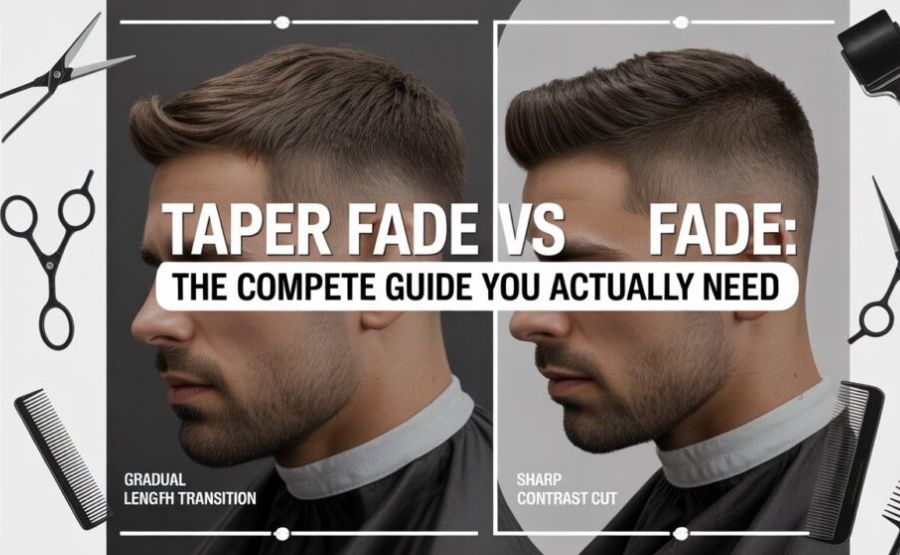
Picture water draining slowly down a slope. The hair on top stays longer. As you move down toward the neck and ears, the length decreases — steadily, smoothly, without drama.
That’s a taper. The change in length is gradual. It never reaches bare skin. The hairline at the back of your neck stays visible, and the hair just gently shortens as it reaches it.
Tapers have been around for decades. They’re what your dad probably got growing up. Clean, classic, and completely at home in a boardroom or a wedding.
The taper works because it doesn’t announce itself. People just notice that your hair looks neat.
What Is a Fade?
A fade does the same basic idea — long on top, shorter on the sides — but it cranks up the intensity dramatically.
Where a taper is like a gentle slope, a fade is like a cliff edge. The hair goes from normal length to very short to practically nothing, often fading right into bare skin. The contrast between the top and the sides is stark. You notice it immediately.
Fades typically start higher up the head than tapers do. That high starting point is what creates that sharp, bold look.
If a taper whispers “neat and put together,” a fade shouts “I just left a really good barbershop.”
The Key Thing That Separates Them
Here’s the single clearest way to understand it.
A taper stops at your natural hairline. The skin at your neck and around your ears stays covered. The hair just gets shorter as it approaches that line.
A fade pushes past that boundary. It blends right down into the skin, often cutting above the natural hairline. You see the actual scalp at the bottom before the hair begins.
One respects the natural hairline. The other deliberately crosses it.
Wait — What Is a Taper Fade Then?
Good question. This is where it gets interesting.
A taper fade sits right in the middle. Think of it as a hybrid. It uses fade-style blending techniques, but focuses that sharpness specifically around the sideburns and at the neckline, rather than going aggressively high up the whole head.
The result is a haircut that looks clean and defined without screaming for attention. It’s modern without being extreme.
This is actually what many people picture when they say “fade.” They imagine something sharp and polished — but not necessarily all the way down to skin across the entire side of the head. The taper fade hits that sweet spot.
Some places even call it a temple fade or Brooklyn fade — different names, same general idea.
The Types of Fades — Because There Are Several
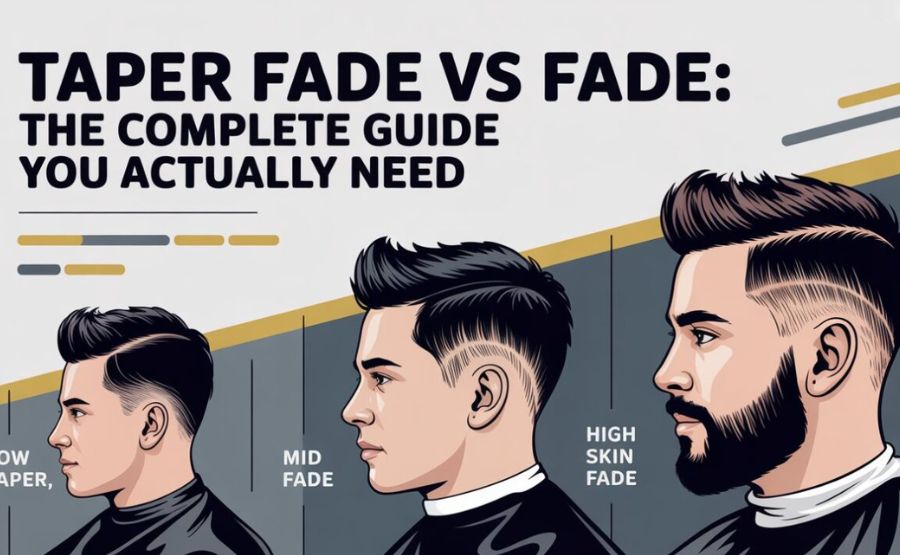
Once you’ve decided you want a fade, the next question is where it starts in your head. That single factor changes the whole personality of the haircut.
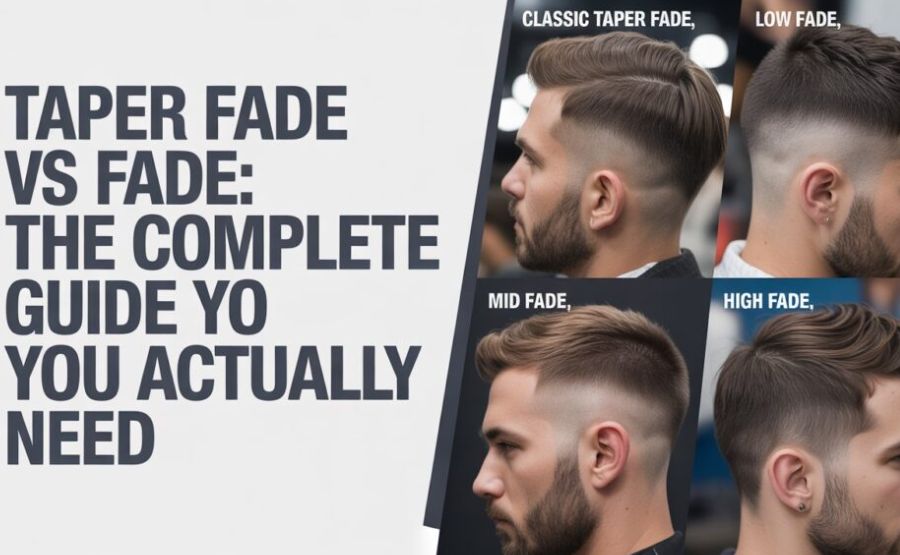
Low Fade
The fade starts just above your ear and curves gently down toward the neckline. This is the most subtle type of fade. It’s clean and modern without being dramatic. Great if you want the neat edges of a fade without going full bold. Stays looking sharp for about 3 to 4 weeks.
Mid Fade
This one starts at roughly ear level and works its way up. It creates noticeably more contrast than a low fade. This is the most popular choice right now because it hits that balance between bold and professional. Plan to visit the barber every 2 to 3 weeks.
High Fade
The transition starts 2 to 3 inches above the ear, high on the sides of the head. This creates maximum contrast. The top hair looks like it’s sitting on a completely shaved platform. This is a statement. Athletes, creative types, and anyone who wants their haircut to be the first thing you notice goes high fade. Requires the most upkeep — every 1 to 2 weeks, minimum.
Skin Fade (Bald Fade)
The hair blends all the way down to bare skin, touching zero length at the bottom. No gradual stop at a short clipper length — it goes fully to skin. The sharpest and most demanding of all the fades. Looks incredible for about a week, then starts losing its edge.
Drop Fade
Instead of following a straight line around the head, the fade line drops downward behind the ear toward the nape. It follows the natural curve of your head rather than fighting it. Works beautifully on curly hair. Gives a more relaxed energy than a straight-across fade.
Burst Fade
The fade fans out in a half-circle shape around the ear, like sunrays spreading outward. It’s one of the most creative and stylish options. Not for everyone, but when it works with someone’s features, it’s genuinely striking.
The Types of Tapers
Tapers are simpler in their variations, which is part of their charm.
Classic Taper
Hair gradually shortens from the crown down to the natural hairline. Clean neckline, covered ears, subtle transition. Works with almost any top style.
Low Taper
The shortening happens only at the very bottom, close to the neck and ear edges. Most of the sides keep their length. The most conservative option. Perfect for a job interview or a formal event.
High Taper
The graduation in length starts higher up the sides of the head. More length is cut away. Still softer than a fade because it never reaches skin, but it creates more visual movement than a classic taper.
Skin Taper
The taper gets cut close enough to actually reach skin — but only at the hairline itself, not up the sides of the head. A slightly bolder version of the classic taper that still stays conservative overall.
Which One Matches Your Face Shape?
This is where your actual features come into play.
Round face: A high fade or mid fade adds height and visual length to your face. It makes a round face look more oval, which most styling guides consider the most flattering. Avoid low fades if your face is round — they don’t help the shape.
Oval face: Lucky position to be in. Both tapers and fades work well on oval faces. You can go low, mid, or high with confidence.
Square face: A taper softens those strong angular lines. A fade adds structure but can look very intense. Both can work, but the taper is more forgiving.
Long or oblong face: Stay away from high fades. They add visual height, which is the last thing a longer face needs. A low fade or a taper keeps the proportions balanced.
Heart-shaped face: A taper fade or low fade keeps the focus off a wider forehead. Avoid anything too high that draws the eye upward.
Which One Suits Your Hair Type?
Hair type matters just as much as face shape. Your barber needs to work with what you’ve actually got.
Thick or coarse hair: Fades, including skin fades, work beautifully here. The contrast is sharp and clean. Thick hair on the sides can look bushy if not properly faded, so going shorter actually helps.
Fine or thinning hair: The taper is your best friend. A fade that goes close to the skin will expose scalp on the sides, which most men want to avoid. The softer gradient of a taper hides that naturally.
Curly or coily hair: Almost every option works, but mid and high fades do something special with curly hair. The tight texture on top creates dramatic, beautiful contrast against closely cropped sides. Drop fades work particularly well because they flow with the natural shape of the head.
Straight hair: Both styles work. The choice becomes about the look you’re after rather than any technical hair concern.
Taper vs Fade for Professional Settings
If you work in a conservative or formal environment, this question comes up a lot.
Tapers win the professional context almost every time. The subtle transition, the covered hairline, the overall restrained elegance of a taper fits naturally with suits, formal shirts, and traditional office environments. It says you care about your appearance without making your haircut the loudest thing in the room.
A low or mid fade can work professionally too. Plenty of men wear them in offices every day. But a high skin fade in a very conservative setting might attract comment.
The rule of thumb is simple: the more skin you show, the bolder the statement. Dial it up or down based on where you’re going.
Maintenance — The Part Nobody Warns You About
This is the practical bit that actually determines which haircut fits your life.
A taper is genuinely low maintenance. The gradual transition grows out gently, so even three or four weeks later, it still looks intentional rather than neglected. You can get away with a monthly barber visit.
Between appointments, a quick trim of the neckline with a personal trimmer keeps it sharp.
A fade is a different story entirely. The short sides — especially if they’re close to skin — start losing their definition within days. A high skin fade can look blurry after just seven to ten days. If you want it to look good consistently, you’re visiting the barber every one to two weeks.
The cost of that adds up. Before you commit to a dramatic fade, do the math on what regular touch-ups will cost you across a year.
The Taper Fade: Best of Both Worlds?
For a lot of men, the taper fade is genuinely the answer. It delivers the clean, defined edges of a fade around the sideburns and neckline. But it doesn’t go aggressively high up the sides of the head.
The result is modern and sharp-looking without requiring twice-weekly maintenance or looking out of place at a Monday morning meeting.
It’s also the most searched haircut style right now. When most people scroll Instagram and see a “clean fade,” they’re often actually looking at a taper fade — the term just doesn’t always make it into the caption.
What to Actually Say at the Barbershop
Most awkward barbershop moments come from one thing: not knowing the vocabulary. Here are phrases you can actually use.
For a classic look: “Give me a taper — low on the sides, keep the hairline natural.”
For something modern but not extreme: “I want a low or mid taper fade. Keep it professional.”
For a bold look: “High fade, skin close on the sides. Longer on top.”
For maximum impact: “Skin fade, mid to high, with a defined line-up.”
For something in between: “Taper fade — I want it clean around the sideburns and neckline but not going skin-level.”
Bring a photo. Genuinely, bring a photo. It removes all ambiguity. Show your barber what you actually have in your head, and you’ll walk out with it.
Final Words
Taper and fade aren’t competitors. They’re two different tools that serve different purposes for different lives, face shapes, and personal styles.
The taper is quiet confidence. It’s the haircut that works in every room without needing to announce itself.
The fade is visible. It says you cared enough to get this sharp, and you’ll be back in two weeks to keep it that way.
The taper fade sits right in the middle — clean and modern, without demanding too much from your schedule or your wallet.
Now you know the difference. Next time you’re in that chair, you’ll know exactly what to ask for. And you’ll walk out with what you actually wanted.
FAQs
1. What’s the simplest way to explain the difference between a taper and a fade?
A taper gradually shortens hair down toward the natural hairline without ever reaching bare skin. A fade takes that same idea but goes much shorter — often all the way to skin — and starts higher up the head, creating a sharper contrast.
2. Is a taper fade the same as a taper or a fade?
Neither exactly. A taper fade is a hybrid. It uses fade-style precision blending but focuses it around the sideburns and neckline rather than going aggressively high all around the head. It’s generally more subtle than a full fade.
3. Which lasts longer between barber visits?
A taper is much more forgiving. It stays looking neat for 3 to 5 weeks. A mid fade needs a touch-up every 2 to 3 weeks. A high or skin fade starts looking blurry after just 1 to 2 weeks.
4. Is a fade or taper better for the office?
A taper is typically the safer, more professional choice. A low or mid fade can also work in most office environments. High skin fades are bolder and depend on how formal your workplace is.
5. Which is better for a round face?
A high or mid fade adds height to the face and helps a round face look more balanced. Avoid very low options if you’re trying to add some visual length.
6. Which is better for thin or fine hair?
A taper is much better. It avoids exposing scalp on the sides, which close-cut fades can do. The softer gradient works with what you have rather than against it.
7. What is a low taper fade?
A low taper fade is a hybrid style that starts fading very low on the head, just above the ears and at the neckline. It’s subtle, clean, and one of the most professional-looking options available.
8. What is a skin fade?
A skin fade, also called a bald fade, means the hair blends all the way down to bare skin at the bottom. It’s the sharpest, most defined type of fade and requires the most maintenance — typically every 1 to 2 weeks.
9. Can curly hair fade?
Absolutely. Mid and high fades can look especially striking with curly or coily hair because the natural texture on top creates beautiful contrast with the short sides. A drop fade also works particularly well with curls.
10. What’s a drop fade?
A drop fade is when the fade line curves downward behind the ear rather than running straight around the head. It follows the natural shape of the skull and looks great on most people, especially those with curly hair.
11. What’s the difference between a low fade and a low taper?
Both start near the bottom of the head. The key difference is that a fade changes length more abruptly and may go to skin. A taper changes length more gradually and stays away from bare skin, stopping at the natural hairline.
12. Is a taper fade good for beginners who’ve never had a fade?
Yes, it’s an excellent starting point. It gives you the clean, modern look of a fade without going as extreme as a full skin or high fade. You can always go bolder once you know what you like.
13. How do I ask my barber for a taper fade?
Say something like: “Give me a taper fade — clean around the sideburns and neckline, but I don’t want it going skin-level. Keep the sides with some length.” Adding a photo reference is always a good idea.
14. Does a fade work for all hair types?
Yes, though how it’s executed changes with hair type. Thick hair takes to fade very naturally. Fine or thinning hair works better with a taper or low fade. Curly hair responds beautifully to mid and high fades. A skilled barber adapts the technique to what you’ve got.
15. Which is more popular right now — fade or taper?
Both are genuinely popular, but the taper fade — that middle-ground hybrid — is probably the most widely requested haircut style right now. When you see “fade” in most social media posts, the actual style is often a taper fade rather than a full aggressive fade.
Explore more, learn more, and think deeper with Theory Magazine.